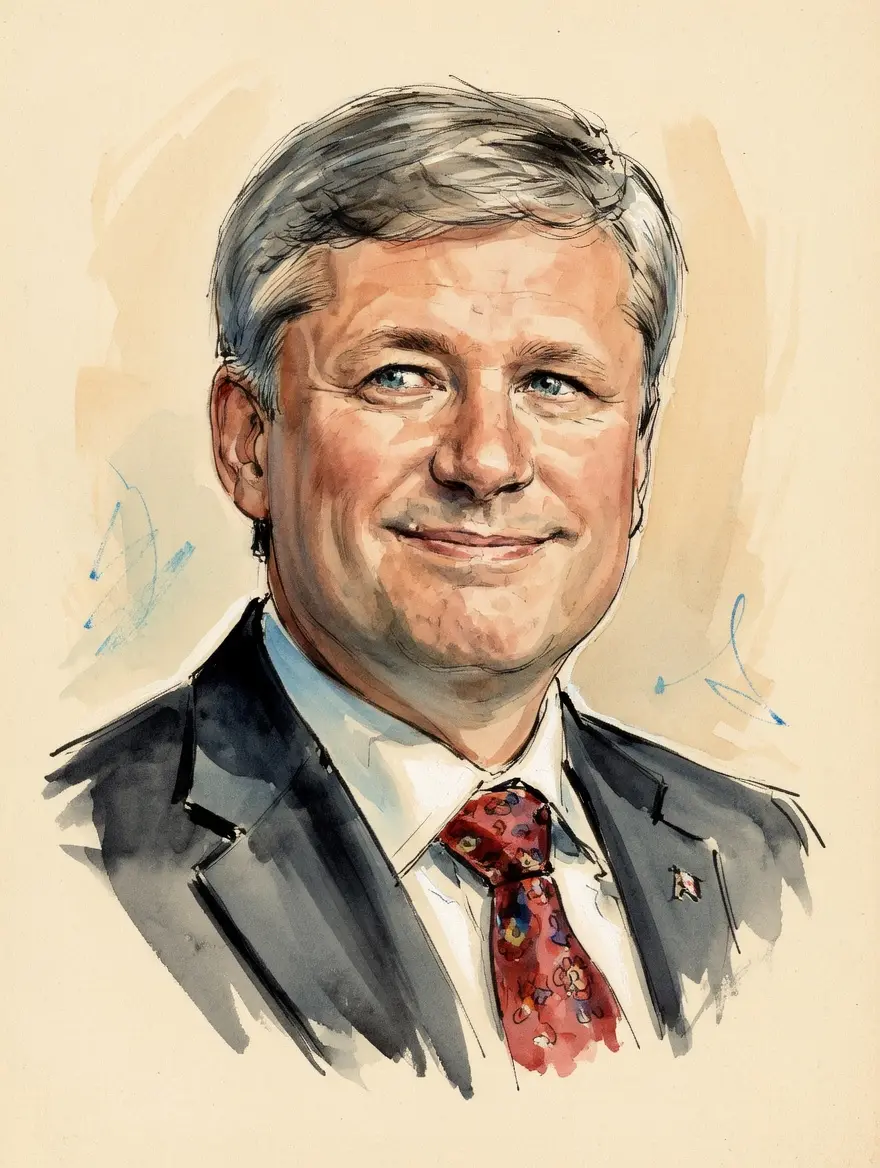
Stephen Harper on Crime
TL;DR
Stephen Harper consistently advocated for punitive, 'tough-on-crime' legislation emphasizing victim rights and harsher sentencing to curb criminal behaviour.
Key Points
The government, under his leadership, implemented several key omnibus bills to toughen the Criminal Code, including measures affecting conditional sentences.
He actively discussed the government's anti-crime agenda with police and victims' advocates in February 2009, reinforcing his focus on their priorities.
His administration made changes to the law regarding pardons, later renamed record suspensions, which critics argued made it harder for former offenders to reintegrate.
Summary
Stephen Harper's core philosophy on criminal justice revolved around a belief in punitive measures designed to be tough on crime, focusing heavily on deterrence and incapacitation rather than rehabilitation. His government enacted numerous legislative changes aimed at imposing harsher sentences, increasing prison capacity, and strengthening penalties for various offenses, often citing the need to protect victims and maintain public safety. A significant component of this approach involved the reintroduction and expansion of mandatory minimum sentences, which his government strongly supported as a necessary constraint on judicial discretion for certain crimes.
This legislative agenda was framed as a response to what he perceived as a 'soft on crime' approach by previous administrations, often using rhetoric that emphasized law and order. The policies frequently generated debate among legal scholars and advocacy groups who argued the measures led to higher incarceration rates and disproportionately affected marginalized communities, suggesting an over-reliance on incarceration. Despite this criticism, the emphasis on restoring aspects of previous law, such as strengthening the law related to pardons, remained central to his political identity on the issue throughout his tenure as Prime Minister.
Key Quotes
All Canadians have been shocked by the increasingly brazen shootings and other acts of violence that we see on the streets of Vancouver and other cities,” said the Prime Minister.
We said 'do the crime, do the time.' We have said that through numerous pieces of legislation. We are enforcing that. And on our watch the crime rate is finally moving in the right direction, the crime rate is finally moving down in this country.”
“...more private member's legislation that has gone through Parliament under this government than multiple governments before us.”
Frequently Asked Questions
Stephen Harper's main stance was strongly 'tough on crime,' prioritizing deterrence and incapacitation through stricter laws. He focused on increasing penalties and strengthening the rights of victims of crime during his time in office.
Yes, Stephen Harper strongly supported mandatory minimum sentences as a critical component of his government's tough-on-crime approach. He viewed them as necessary to ensure consistent punishment for serious offenses.
The implications of the policy included an increased focus on incarceration and a legislative shift toward harsher sentencing frameworks. This approach, however, sparked significant debate regarding its effects on prison populations and social equity.
Sources7
Mandatory minimum sentences remain for some crimes despite Harper government's changes to Criminal Code
Criminal Justice Policy during the Harper Era: Private Members’ Bills, Penal Populism and the Criminal Code of Canada
PM discusses government's anti-crime agenda with police and victims' advocates
Tough on Crime: The Conservative Record
What Prime Minister Stephen Harper got right
Criminal justice policy
Doob & Webster on Crime and Punishment: The Conservative Era
* This is not an exhaustive list of sources.