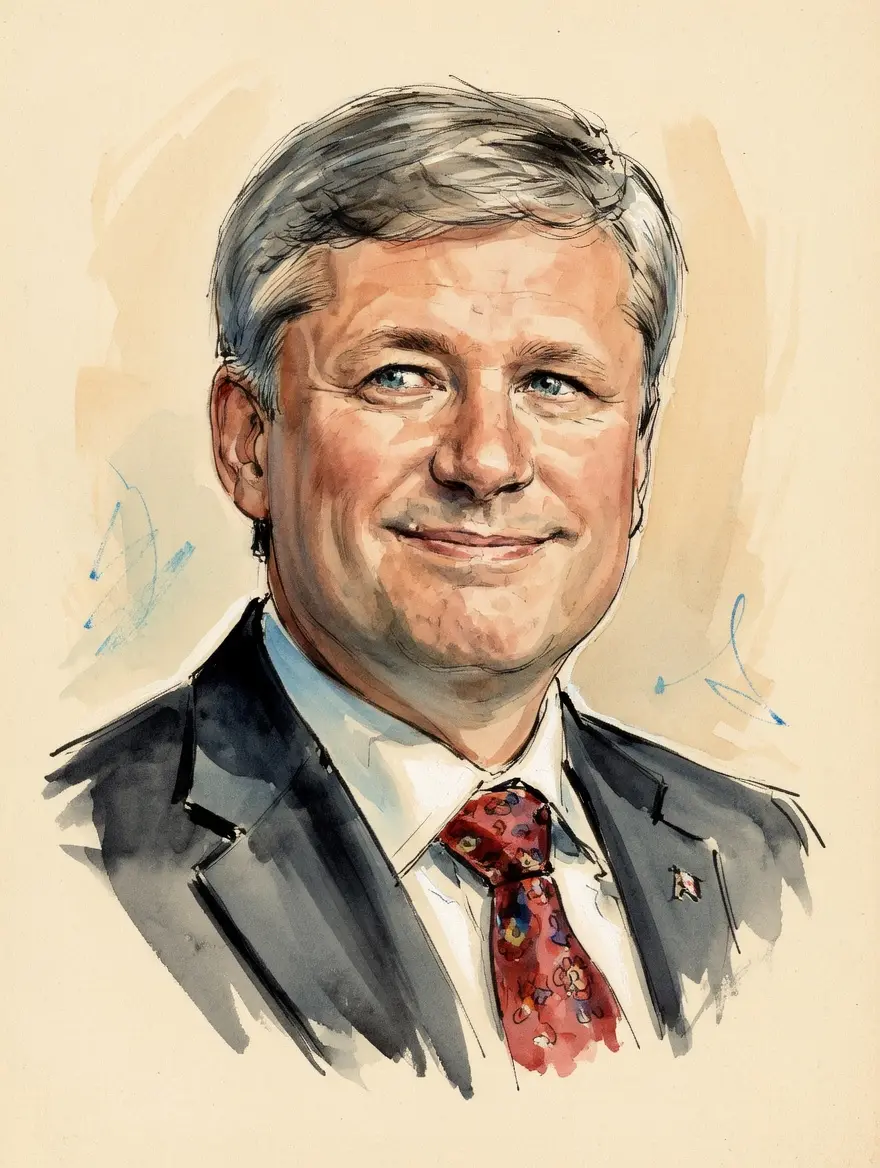
Stephen Harper on Elections
TL;DR
Stephen Harper's approach to elections has centered on legislative changes and maintaining a strong, loyal base of support to secure victory.
Key Points
The Conservative Party under his leadership was found guilty of improper election spending and falsifying records in the 'In and Out scandal' stemming from the 2006 election.
He introduced Bill C-16, which established fixed general election dates but maintained the Prime Minister's power to advise dissolution based on a loss of confidence.
His government pursued changes via the Fair Elections Act, which critics contended restricted the non-partisan body responsible for administering elections from encouraging citizens to vote.
Summary
Stephen Harper's political career involved significant engagement with the mechanics and regulation of Canadian elections, both as a proponent of reform and as a participant who benefitted from the existing system. During his time as Leader of the Opposition, he introduced private member's bills aimed at establishing fixed election dates, an idea later passed as government legislation, Bill C-16, in 2007, which sought to enhance predictability while preserving the Prime Minister's prerogative to advise dissolution based on confidence matters. However, his use of this prerogative, such as proroguing Parliament to avoid a confidence vote and calling an early election in 2008 despite the fixed date law, generated legal challenges alleging contravention of the spirit of the legislation and infringement of fair election rights.
His government's tenure also saw controversy surrounding electoral integrity, notably the introduction of the Fair Elections Act, which critics argued was designed to make voting harder for demographics less likely to support him, such as by stripping authority from Elections Canada to encourage voting and by cutting its budget. His party faced further allegations related to the 'Robocall scandal' during the 2011 election, where misleading calls were made to suppress opposition voters, and his post-premiership advisory roles include chairing an international organization that assists in electing right-wing parties globally.
Frequently Asked Questions
Stephen Harper's position is evident in his actions as Prime Minister, which focused on legislative reforms affecting election timing and administration. He sought to impose fixed election dates, which was enacted, while also facing controversy over legislative changes critics claimed restricted voter access. His political victories were often attributed to maintaining a very stable, large base of support.
While his early political career involved advocating for electoral reform like fixed dates, his later actions in government, particularly regarding the Fair Elections Act, were seen by some as making voting more difficult. His approach appears consistent in seeking structural advantages, whether through formal legislation or through actions that consolidated the base that reliably voted for him.
Stephen Harper’s government dealt with allegations of voter suppression in the 'Robocall scandal' during the 2011 election, where a staffer was convicted for misleading calls. Later, his party's introduction of the Fair Elections Act was framed by supporters as a measure to combat fraud, though opponents viewed it as voter suppression.
Sources8
20 years after his first election win, Stephen Harper steps back into the spotlight
Canada's prime minister wants to make it harder for people to vote against him
Federal Court to Decide If P.M. Harper Won an Illegal Election
Stephen Harper - Wikipedia
With Canada's failed voting system, it's all about that base - FairVote
The Defeat of Stephen Harper: A Case Study in Social Movement Electoralism
Stephen Harper Heads a Global Org That Helps Get Right-Wing Parties Elected. What Will It Do for Andrew Scheer?
Politics Blog: Canadians still waiting for Stephen Harper's “time of accountability”
* This is not an exhaustive list of sources.