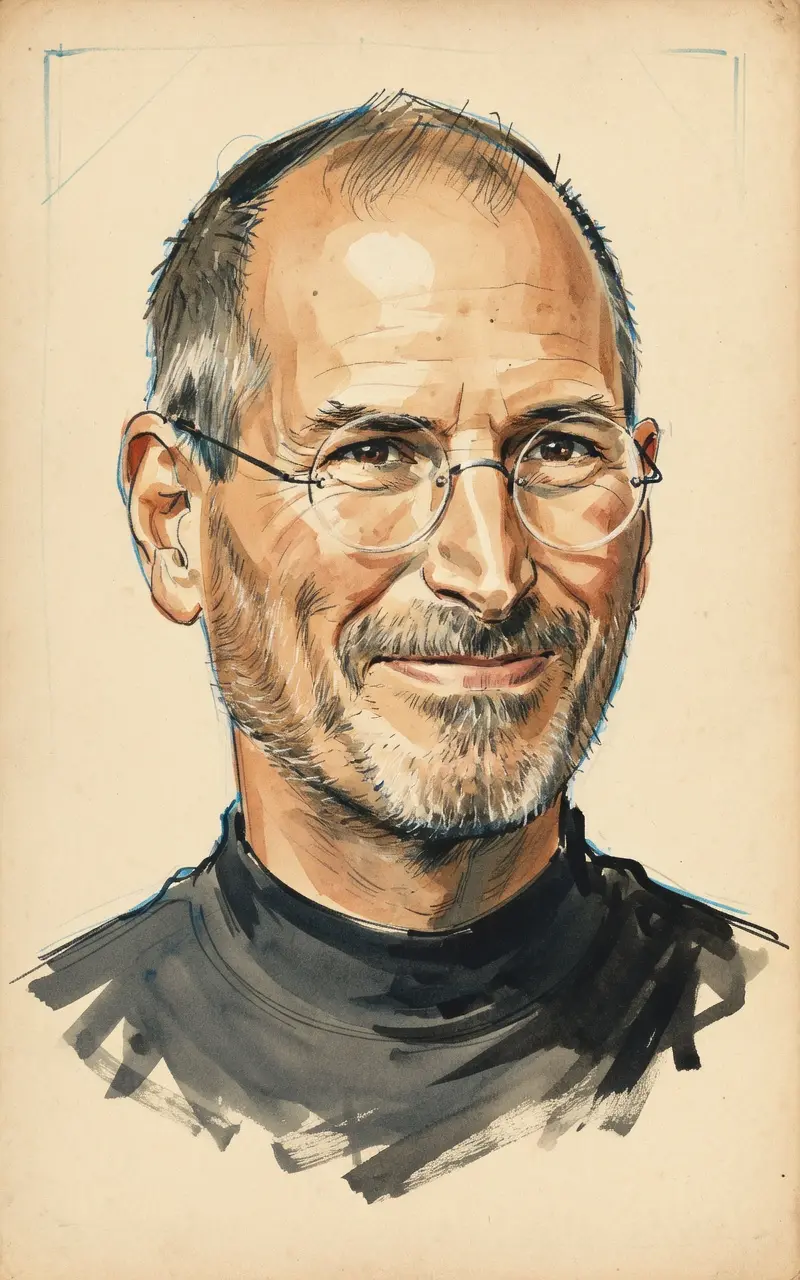
Steve Jobs on Apple
TL;DR
Steve Jobs viewed Apple as the vehicle for merging technology with the liberal arts to enrich human lives through revolutionary products.
Key Points
Co-founded Apple Computer Company with Steve Wozniak and Ronald Wayne in 1976 to build personal computers.
He returned to Apple as CEO in 1997 after his initial departure in 1985, leading to a significant business revival.
Jobs was recognized for his critical contributions to the design of user interfaces and touch screen technology in influential products like the iPhone and iPad.
Summary
Steve Jobs was the co-founder, visionary, and, for much of its history, the leader of Apple Inc., believing the company was meant to merge technology and the liberal arts to enrich lives. He famously recruited a CEO in 1983 by asking if the man wanted to "change the world," underscoring his belief that Apple's purpose transcended mere commerce. His vision drove the creation of highly influential products like the Apple II, Macintosh, iPod, iPhone, and iPad, often prioritizing design aesthetics and user experience over conventional industry standards.
After being fired in 1985, he returned in 1997 to revive the near-bankrupt company, where he again focused efforts on a line of culturally significant products, reiterating his commitment to innovation and shipping products that moved the industry forward. His approach was characterized by intense focus, a pursuit of aesthetic perfection, and an insistence that the company must always be looking ahead, quoting that one must "skate to where the puck is going to be, not where it has been." Even in his final days, he remained focused on shaping Apple's strategic direction.
Frequently Asked Questions
Steve Jobs believed Apple's core mission was to create the most remarkable tools by standing at the intersection of technology and the humanities. He pushed his teams to make products that were not just functional but that genuinely enriched people's lives. This philosophy drove the creation of many of the company's most impactful consumer electronics.
Yes, upon his return as interim CEO in 1997, Steve Jobs immediately set a course to return the company to profitability by concentrating efforts and eliminating projects he deemed non-essential. He was intimately involved in the development and promotion of breakthrough products like the iMac, iPod, and iPhone during this second tenure.
Jobs had a significant power struggle with the board and then-CEO John Sculley, which resulted in his forced departure from the company in 1985. He was brought back in 1997 after Apple acquired his company, NeXT, and was later named permanent CEO, reversing his earlier ousting.
Sources5
Steve Jobs
Remembering Steve Jobs
What would Steve Jobs think of Apple today?
Why did Apple's board fire Steve Jobs in 1985?
Steve Jobs - National Inventors Hall of Fame®
* This is not an exhaustive list of sources.