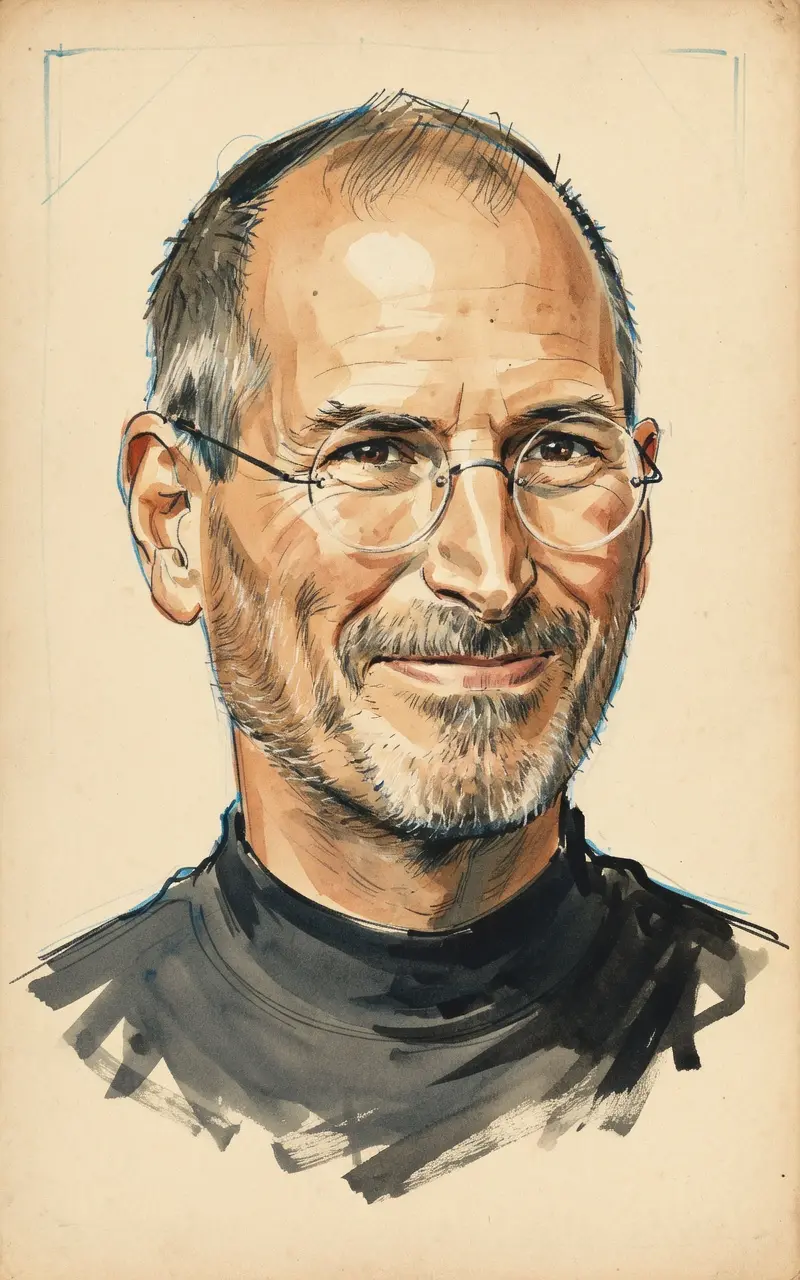
Steve Jobs on Connecting the Dots
TL;DR
Steve Jobs believed one can only connect life's crucial past experiences in retrospect, requiring future trust.
Key Points
He stated that one can only connect the dots looking backward, not looking forward.
The calligraphy course he took at Reed College, which he pursued after dropping out, proved invaluable ten years later for designing typography for the Macintosh.
He concluded that one must trust in something, such as one's gut, destiny, or karma, for the dots to eventually connect.
Summary
Steve Jobs articulated his core position on connecting the dots during his 2005 Stanford Commencement Address, framing it as the first of three personal life lessons. His stance is that it is impossible to connect life's formative experiences prospectively; this understanding only becomes clear in hindsight. For example, he cited his decision to drop out of Reed College and subsequently take a calligraphy class he found beautiful but seemingly impractical. Ten years later, this knowledge directly informed the beautiful typography in the first Macintosh computer. This event serves as the primary evidence for his conviction that life's trajectory is only fully visible in reverse.
The implication of this retrospective clarity is the necessity for profound, forward-looking trust in the process of life itself. Jobs stressed that because one cannot see the future connections, individuals must have faith in their intuition, gut feeling, destiny, or karma to guide present actions. This trust, he stated, allowed him to make the best decisions, such as leaving Apple after being fired, which ultimately led to highly creative and fulfilling subsequent endeavors like Pixar and NeXT. His philosophy encourages pursuing what one loves without immediate regard for practical application, trusting that the necessary dots will eventually align.
Key Quotes
“Again, you can't connect the dots looking forward; you can only connect them looking backward. So you have to trust that the dots will somehow connect in your future. You must trust in something — your gut, destiny, life, karma, whatever. This approach has never let me down, and it has made all the difference in my life.”
Frequently Asked Questions
Steve Jobs's main point is that you cannot connect the dots while you are living through the experiences; you can only truly see how they link together in retrospect. This requires an act of faith in the future while making decisions in the present moment.
He famously used his experience at Reed College, where he took a calligraphy class after dropping out, as the prime illustration. At the time, it seemed to have no practical application, but he later incorporated the beautiful typography knowledge into the Macintosh computer design.
Since he believed foresight was impossible, Jobs argued that one must trust that the dots will eventually connect in one's future. He urged people to trust their gut, destiny, life, or karma to guide them, stating this approach had never failed him.
Sources6
Steve Jobs connecting the dots
Connecting the Dots: What we can learn from Steve Jobs, college drop-out
Steve Jobs & Connecting the Dots
Connecting the Dots – A Theory by Steve Jobs
Steve Jobs & Connecting the Dots
Steve Jobs, Connecting the Dots - Forward and Back
* This is not an exhaustive list of sources.