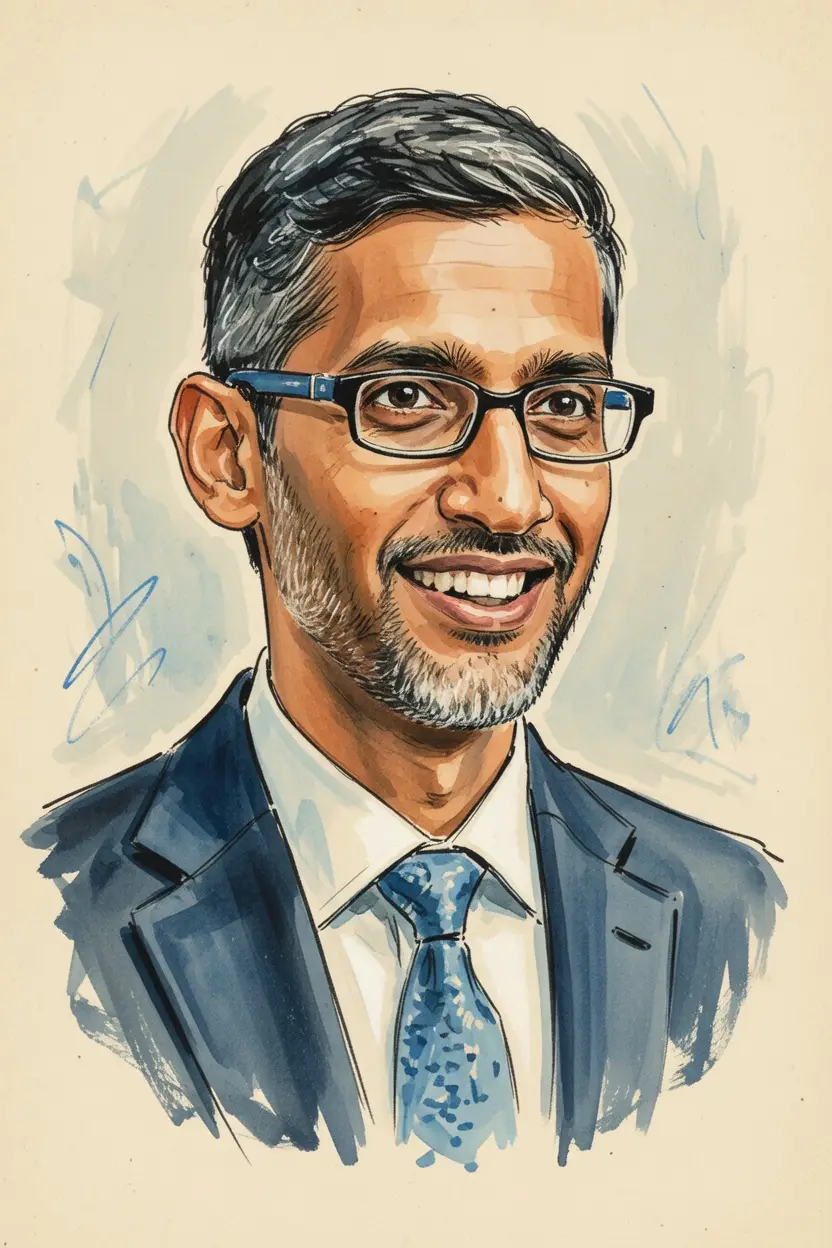
Sundar Pichai on Leadership
TL;DR
Sundar Pichai champions empathetic, coaching-style leadership that prioritizes emotional equilibrium and long-term vision over command.
Key Points
Leadership is fundamentally about coaching and managing people, aiming to win without losing one's team members.
He stresses that emotional outbursts are seldom helpful for problem-solving and create a climate of fear that stifles innovation.
Pichai's approach emphasizes resilience, adaptability, and a growth mindset, viewing failure as a stepping stone to worthwhile achievements.
Summary
Sundar Pichai, CEO of Alphabet and Google, articulates a leadership philosophy centered on resilience, empathy, and coaching rather than commanding others. He believes that maintaining emotional equilibrium under pressure is crucial, as losing one's cool can push teams down the wrong path and damage trust and performance. His approach contrasts with more confrontational styles sometimes seen in the tech industry, suggesting that sustainable success stems from leaders who remain calm during crises. He views great leadership as analogous to great coaching in sports, focusing on man-management to bring out the best in people.
His executive style is characterized by a forward-thinking, visionary approach that adapts to change while remaining grounded in long-term goals. Pichai advocates for building a growth mindset, encouraging continuous learning, and fostering an inclusive environment where open dialogue and collaboration are valued. This blend of technical acumen and emotional intelligence allows him to steer one of the world's largest technology companies through significant shifts, emphasizing that true leadership involves winning without losing the people who achieve those wins.
Key Quotes
“You might fail a few times, but that's OK. You end up doing something worthwhile which you learn a great deal from.”
Frequently Asked Questions
Sundar Pichai's core philosophy is rooted in empathy and resilience, viewing leadership as being more akin to coaching than commanding. He believes in maintaining emotional steadiness, especially in high-pressure moments, to foster a safe and collaborative environment for his teams.
He views failure as an inevitable part of the process, advising that one should wear failure as a badge of honor if they end up doing something worthwhile from it. This perspective encourages calculated risk-taking and supports a long-term vision over immediate perfection.
He employs an empathetic and inclusive leadership style that promotes open dialogue and collaboration over traditional top-down frameworks. This style is supported by a focus on long-term thinking and a commitment to work-life balance for sustained performance.
Sources5
Google CEO Sundar Pichai shares 3 key lessons on how to win without losing your people - Times of India
Sundar Pichai: CEO of Alphabet and Google
Lessons to learn from Sundar Pichai's Leadership Style - CTO Magazine
What is the one powerful lesson you learned from Sundar Pichai (CEO of Google)? Explain in detail with an example.
Sundar Pichai and the Alphabet AI wealth engine | Simple
* This is not an exhaustive list of sources.