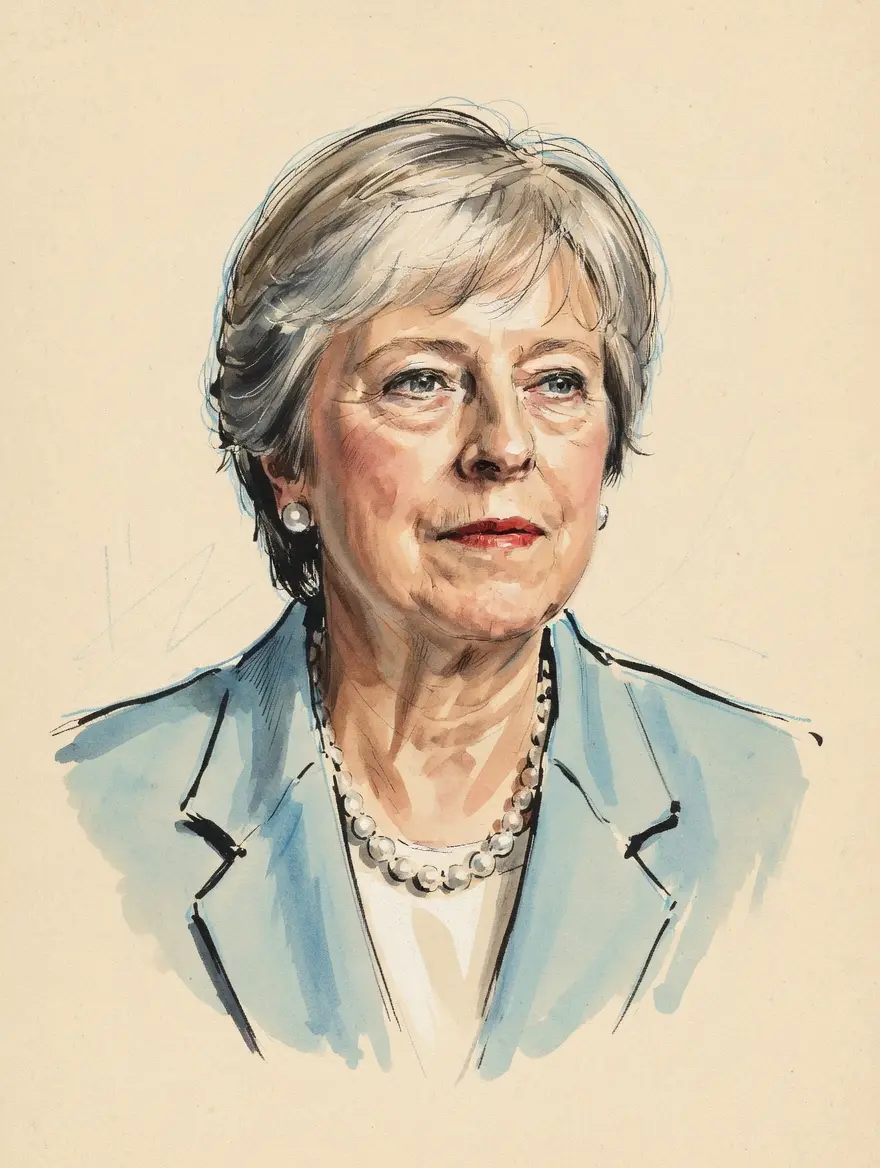
Theresa May
- Known for
- UK Prime Minister, Brexit negotiations, Conservative Party Leader
- Born in
- Eastbourne, United Kingdom
- Education
- BA, University of Oxford
Theresa May served as the UK's second female Prime Minister, defined by her commitment to One-Nation Conservatism and her relentless struggle to deliver Brexit. Rising to power after the 2016 referendum, her leadership was dominated by navigating the UK's departure from the EU. Her tenure is characterized by a pragmatic, often tough, approach to governance, especially during her earlier role as Home Secretary.
Signature Positions
May held strong positions across key policy areas, particularly concerning security and national borders:
- Brexit: Initially a Remain supporter, she became the face of Brexit means Brexit, prioritizing immigration controls over Single Market membership.
- Immigration: Advocated for a hostile environment policy and pursued significant restrictions on Family Migration to meet net migration targets.
- Law & Order: Took a hard line on drugs, banning khat, and oversaw the deportation of radical cleric Abu Qatada after years of legal battles.
- Economy: Promoted "Mayism," a form of working-class conservatism, promising to curb executive pay and increase worker representation on company boards.
- LGBTQ+ Rights: Exhibited an evolution, moving from past opposition to supporting same-sex marriage during her premiership.
Notable Tensions
May's time in office was marked by intense political and ethical conflicts:
- Brexit Negotiation Failures: Her premiership was ultimately undone by repeated Brexit deal defeats in Parliament, including the largest defeat against a UK government in history.
- Windrush Scandal: Her long-standing hostile environment policy was directly linked to the devastating Windrush Scandal, causing significant damage to her credibility.
- Contempt of Parliament: Her government became the first in UK history to be found in contempt of Parliament over transparency regarding the Brexit withdrawal agreement legal advice.
- Foreign Policy Contradictions: While championing human rights, she defended arms sales to Saudi Arabia for security reasons, drawing sharp criticism from activists.
May’s premiership contrasts sharply with her predecessor, David Cameron, and successor, Boris Johnson. Often compared to Margaret Thatcher for her steely resolve, she struggled to unite a fractured Conservative Party. Her focus on "burning injustice" and unity marked a brief shift toward one-nation conservative economic interventionism before the overwhelming demands of Brexit took center stage.