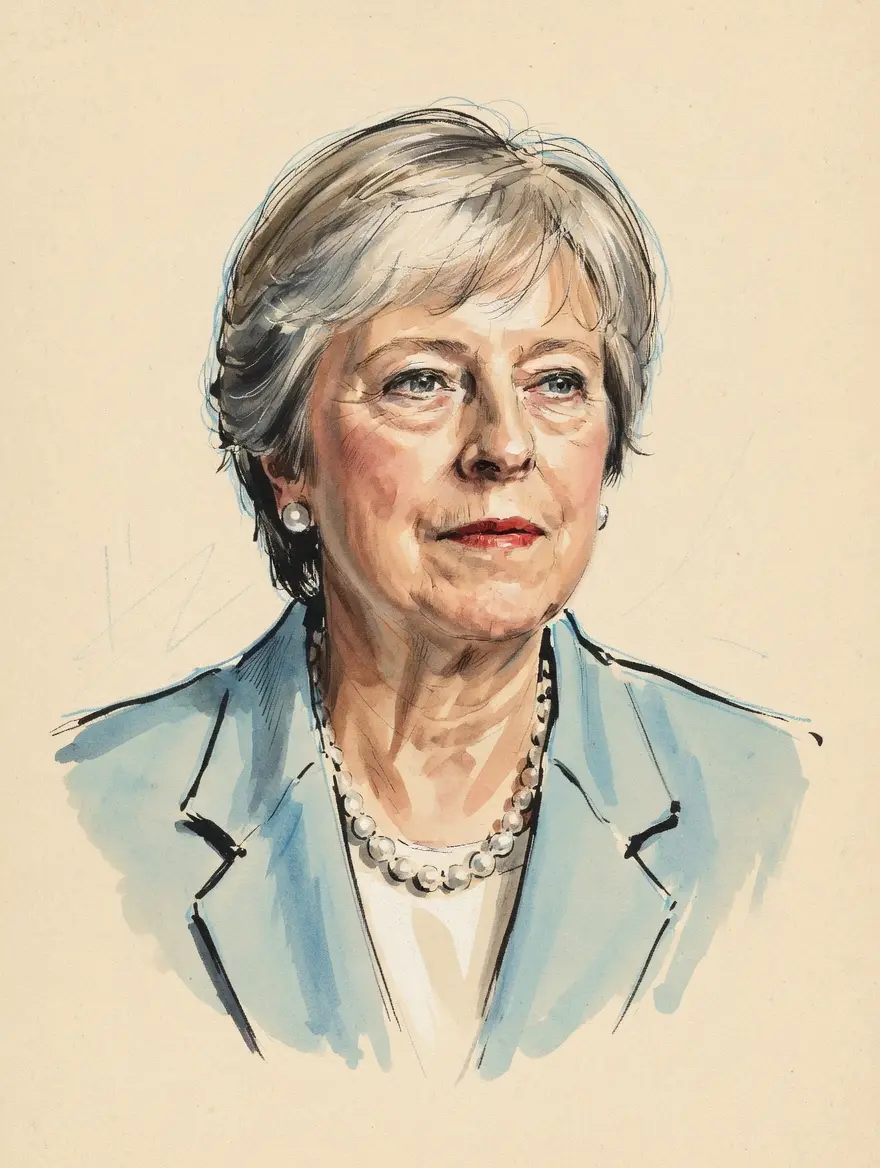
Theresa May on Xi Jinping
TL;DR
Theresa May pursued a pragmatic 'Golden Era' of relations with Xi Jinping focused on trade, despite later caution on security matters.
Key Points
She visited China in January 2018 to secure major trade and investment deals, emphasizing a continuation of the 'Golden Era'.
Theresa May confirmed a review of Chinese involvement in critical national infrastructure projects, notably the Hinkley Point C nuclear power station.
Following her premiership, she stated that the UK needed to address security risks posed by China, shifting away from pure economic focus.
Summary
Theresa May, during her premiership, adopted a stance toward Xi Jinping rooted in strengthening the economic relationship between the UK and China, often referencing the "Golden Era" of bilateral ties established previously. Her visits and engagements emphasized securing trade deals and investment, exemplified by a major business delegation trip to Beijing in early 2018 where significant commercial agreements were announced. She consistently sought to balance the desire for economic partnership with necessary security and political considerations, viewing engagement with the Chinese leader as central to her vision for a 'Global Britain' post-Brexit.
However, this engagement was not uncritical, with May expressing concerns over specific issues such as human rights and calling for a full review of Chinese involvement in critical national infrastructure projects following her tenure. While the official diplomatic tone remained broadly cooperative under Xi Jinping's leadership to secure economic benefits, private and later public statements indicated a growing awareness of strategic competition and the need for vigilance regarding Chinese influence. The relationship was thus characterized by a practical, transactional focus on trade alongside nascent, more cautious assessments of security implications.
Key Quotes
The UK will continuously remain committed to pushing forward the development of the "golden era" of bilateral relations. The UK stands ready to, together with China, strengthen cooperation in various fields and deepen a stronger partnership so as to jointly promote world peace and prosperity in the 21st century.
Frequently Asked Questions
Theresa May's primary objective when engaging with Xi Jinping, particularly during her 2018 visit, was to bolster the economic relationship between the UK and China. She sought significant trade deals and investment to support her post-Brexit 'Global Britain' strategy. This focus often placed economic priorities ahead of other geopolitical concerns.
Yes, although she publicly pursued a pragmatic engagement, Theresa May later indicated private concerns regarding security matters and Chinese influence. She called for a comprehensive review of Chinese investment in sensitive UK infrastructure, signaling a hardening of the stance post-premiership.
Theresa May viewed the 'Golden Era' of UK-China relations as the foundation for her economic diplomacy with Xi Jinping. She worked to build upon this existing framework to deliver tangible trade benefits for the UK economy. This era represented the cooperative diplomatic basis for her bilateral engagement.
Sources8
President Xi Jinping Meets with British Prime Minister Theresa May
Theresa May in China: what she wants and what she can expect
Theresa May China visit: UK agrees to new trade deals
Theresa May and China: the essence of a working relationship
Britain's May gets $13.26 billion in China deals as Xi promises to build on 'golden era'
Xi Jinping Meets with British Prime Minister Rishi Sunak
China and Theresa May’s ‘Global Britain’ had a date with reality
World leaders meet for tea ceremony
* This is not an exhaustive list of sources.