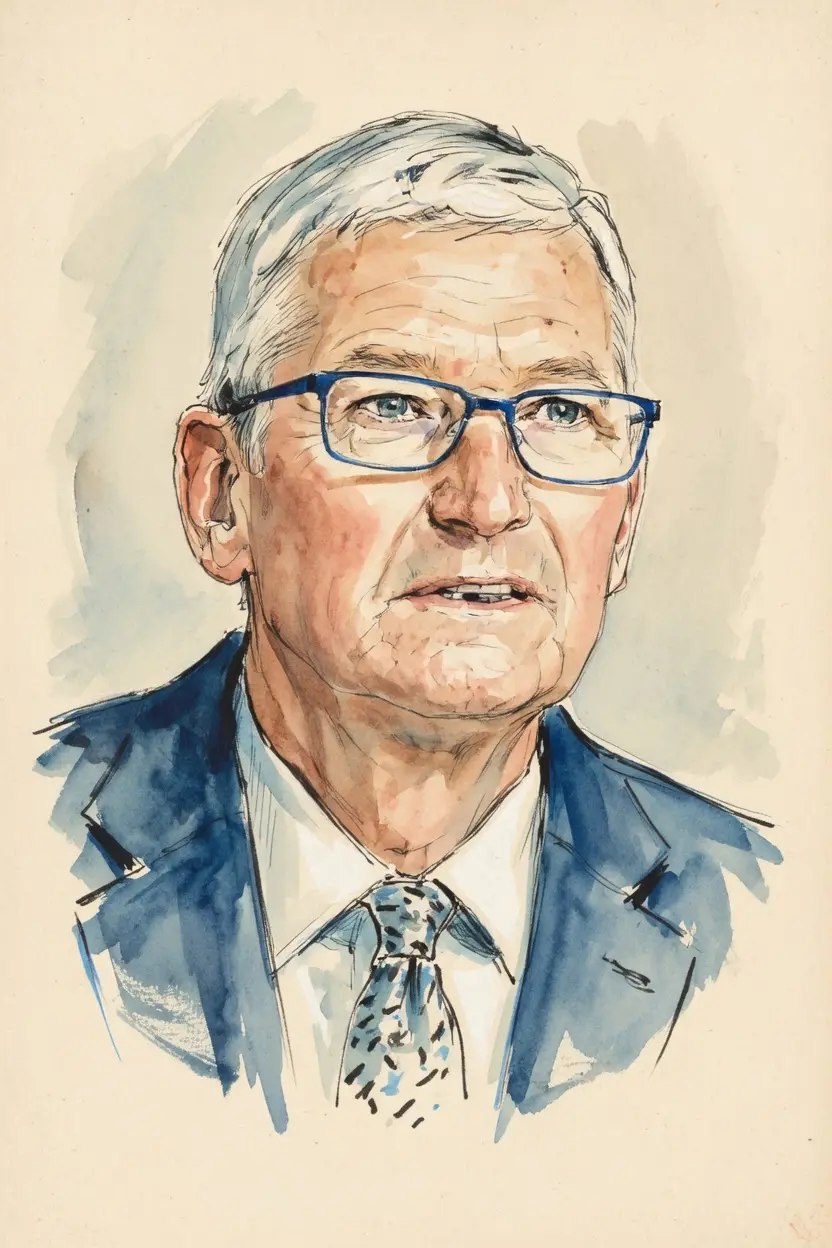
Tim Cook on Apple Vision Pro
TL;DR
Tim Cook strongly views the Vision Pro as an early-adopter success that is foundational for the future of spatial computing.
Key Points
He described the Vision Pro as "arguably a success today from an ecosystem-being-built-out point of view" as of October 2024.
Cook explicitly stated that at its initial price of $3,500, the device is "not a mass-market product" but rather one for early adopters.
He indicated strong continued focus on the product, noting excitement for visionOS 2 features like Spatial Widgets and improved Personas in February 2026.
Summary
Tim Cook frames the Apple Vision Pro as an initial success from the perspective of building out the software ecosystem, acknowledging that its high price point positions it squarely as an early-adopter product rather than a mass-market item for now. He contends that, much like the iPod or iPhone, significant new product categories do not achieve ubiquity overnight and require time to evolve and improve. The chief executive expresses excitement over the technology's current user base, which is composed of enthusiasts willing to embrace tomorrow's technology today.
He remains firmly focused on the product’s evolution, emphasizing belief in the entire spatial computing space Apple is pioneering. Cook has expressed enthusiasm for operating system updates like visionOS 2, highlighting advancements in areas such as Spatial Widgets and more lifelike Personas, alongside new enterprise application programming interfaces. The implication is that the current hardware is the necessary first step, a foundation upon which future, likely lighter and cheaper, iterations will build toward wider adoption.
Frequently Asked Questions
Tim Cook acknowledges that the initial $3,500 price point means the Vision Pro is not a mass-market device currently. However, he views its launch as a success because it has stimulated the development of its software ecosystem. He is content with the current base of early adopters who want to experience tomorrow's technology today.
Yes, he has expressed confidence in the long-term potential of the device and the spatial computing category it introduces. He draws parallels to the iPod and iPhone, noting that revolutionary products take time to gain ubiquity. He is focused on the evolution of the technology through ongoing hardware and software updates.
The chief executive stated that he has not altered the roadmap but remains deeply committed to the product category. He expects future versions to be lighter and cheaper, building upon the foundation laid by the first generation. His stance implies patience is required for this technology to mature.
Sources5
Tim Cook On Apple Vision Pro's Success: “At $3500, It's Not A Mass-Market Product”
Here's What Tim Cook Thinks About Apple's Vision Pro After Low Sales
Tim Cook talks Apple Vision Pro for @WSJ : r/VisionPro
First Pic of Cook Wearing Vision Pro-But My Question is …
In the Loop: A big week ahead
* This is not an exhaustive list of sources.