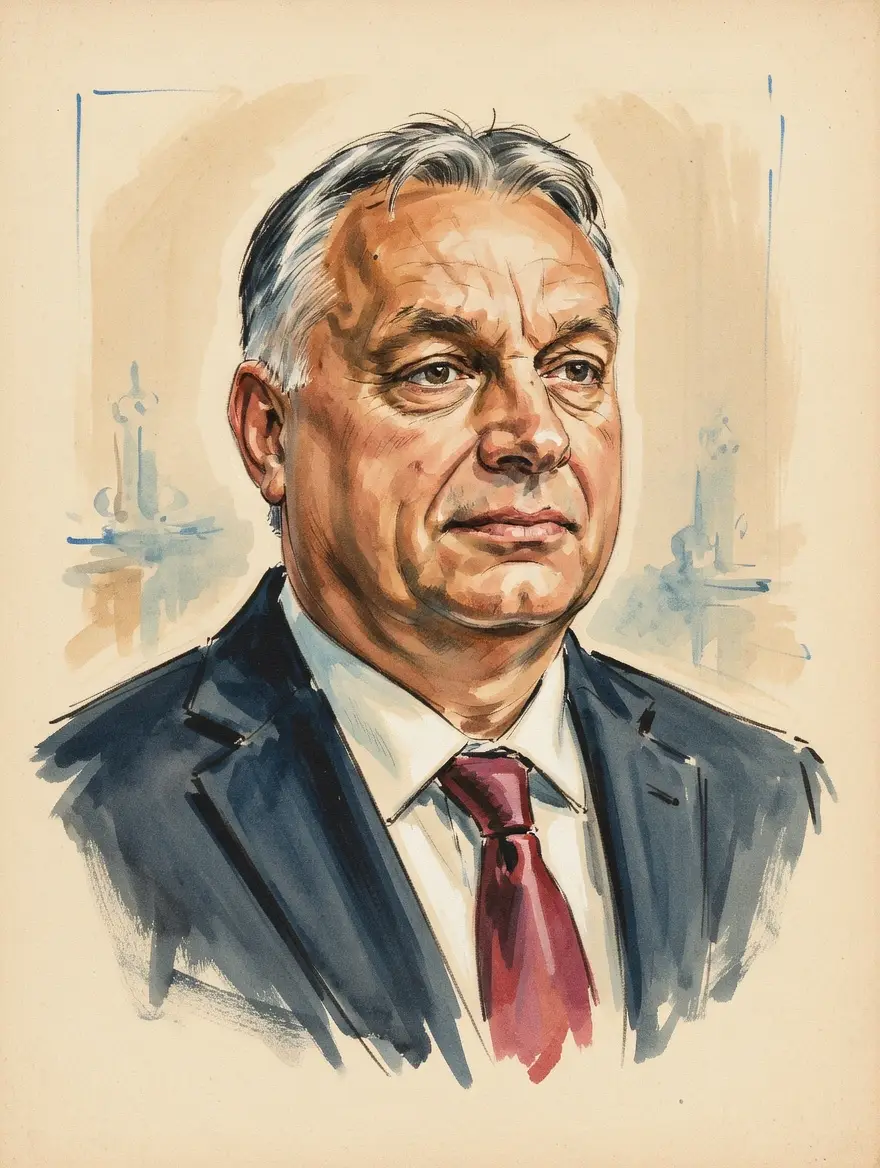
Viktor Orban on Illiberal Democracy
TL;DR
Viktor Orban proudly champions Illiberal Democracy as a Christian-based alternative to Western liberal norms.
Key Points
He explicitly stated in 2014 that Hungary was constructing an 'illiberal state' by breaking with adopted Western ideologies.
His definition of Christian democracy, which he posits as the alternative to liberal democracy, is explicitly 'not liberal' in his view.
The consolidation of his power, which enabled the illiberal turn, began after the Fidesz party won a two-thirds parliamentary supermajority in 2010.
Summary
Viktor Orban explicitly endorses the concept of illiberal democracy, having publicly claimed that the state he is constructing in Hungary is an illiberal one. He frames this ideology as a necessary break from the dogmas of Western liberalism, often contrasting it with a Christian democracy focused on national culture, traditional family models, and anti-immigration stances. He seeks to equate the term 'liberal' with left-wing or progressive policy positions, thereby justifying the rejection of core liberal tenets like multiculturalism and adaptable family structures.
His move to champion this system followed his 2010 election victory, which granted his Fidesz party a parliamentary supermajority allowing fundamental constitutional changes. This illiberal turn involves consolidating power through measures like reshaping the judiciary, controlling the media, and engineering electoral districts to favor his party. Although critics often frame illiberal democracy as a descent into authoritarianism, Orban suggests that democracy does not inherently require liberalism and that his system is a viable, principled model for the nation's future.
Key Quotes
“Today we are creating a political formation that I believe will multiply and very quickly become the largest faction of the European Right,”
Frequently Asked Questions
Viktor Orban's position is one of strong advocacy, defining Illiberal Democracy as a Christian democracy superior to Western liberalism. He argues that a state can be democratic without being liberal, prioritizing national Christian culture over liberal tenets. He sees this system as the necessary path for Hungary's future.
While the term itself was introduced academically by Fareed Zakaria in 1997 as a critical concept, Viktor Orban was the first political leader to openly embrace and positively endorse it. He used the concept, or its equivalent, in a 2014 speech, transforming it from a critical epithet into a self-description.
According to Orban's framework, the primary differences are that liberal democracy favors multiculturalism and is pro-immigration, whereas his illiberal Christian democracy prioritizes Christian culture and is anti-immigration. He also contrasts liberal support for adaptable family models with his support for the Christian family model.
Sources7
Scowcroft Paper 20 | Anti-Democratic Politics in Hungary: Viktor Orbán and “Illiberal Democracy”
Illiberal Democracy and the Struggle on the Right
Hungary’s Viktor Orbán faces challenge to his illiberal democracy
How to Erode a Democracy: Hungary’s Illiberal Turn Under Orbán
What is going on in Illiberal democracy Hungary? - Amnesty International
Hungary's Illiberal Democracy - UVA Religion Lab
Antiliberalism and Counter-Enlightenment for the 21st Century: Viktor Orbán's Illiberal Political Ideology
* This is not an exhaustive list of sources.