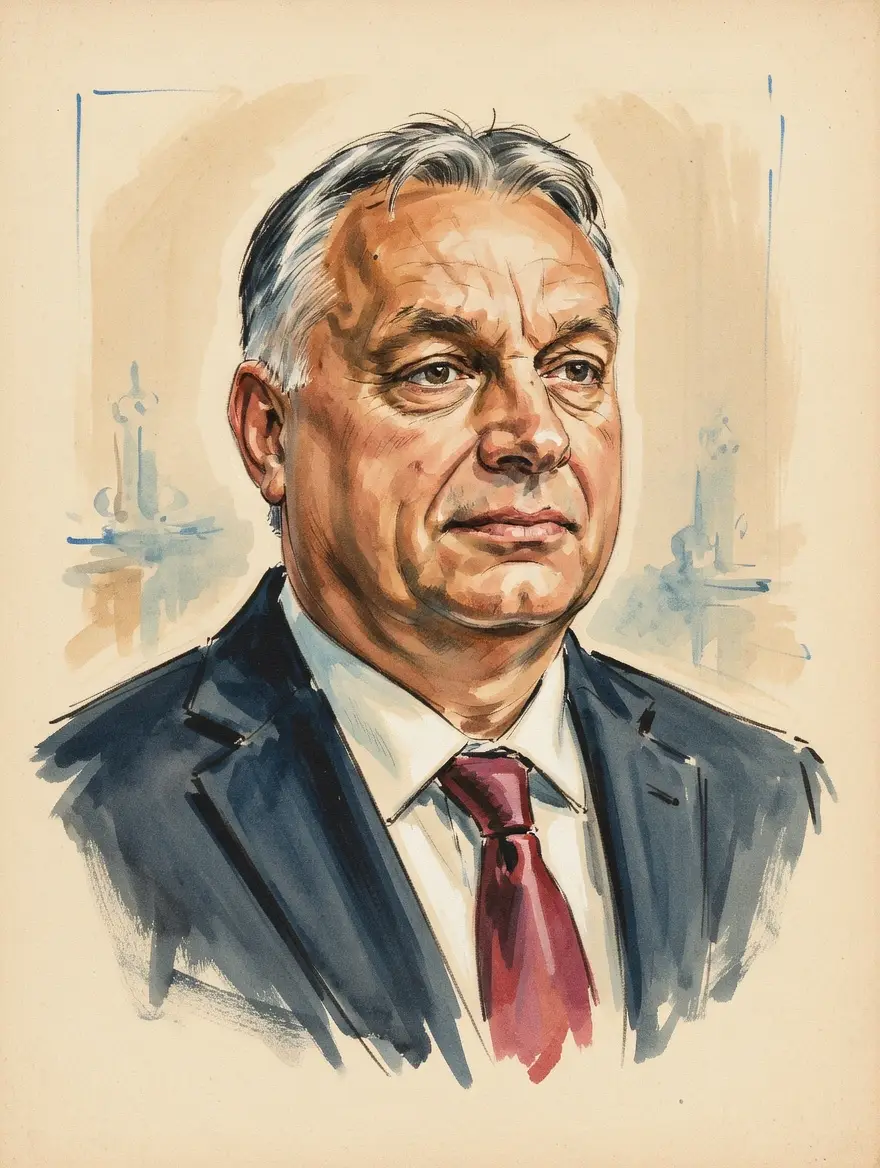
Viktor Orban on Immigration
TL;DR
Viktor Orban strongly opposes mass immigration, viewing it as a threat to Hungary's Christian culture and national identity.
Key Points
He described the arrival of asylum seekers in Europe as “a poison” and asserted that Hungary needed “not a single migrant” for its economy or population sustainability in July 2016.
His government constructed a razor-wire-topped fence along the southern borders with Serbia and Croatia to physically deter illegal border crossings.
Hungary was ordered by the European Court of Justice to pay a significant fine for persistently breaking the bloc's asylum rules, which Orban vowed to fight.
Summary
Viktor Orban maintains a fiercely restrictive and vocal stance against immigration, framing it as a fundamental threat to Hungary's national security and cultural homogeneity, particularly since the 2015 migration crisis. He has consistently defined illegal migrants as a danger, explicitly linking their arrival to terrorism and asserting that foreign populations risk overwhelming the host culture. This position is operationalized through tangible measures, including the construction of border fences and the implementation of laws that criminalize assistance to unauthorized migrants. Orban has also openly defied the European Union’s attempts to establish mandatory migrant relocation quotas, insisting on Hungary’s sovereign right to decide who resides within its borders.
Despite this uncompromising public rhetoric, the government’s policy exhibits contradictions, selectively permitting guest workers, particularly from East Asia, to fill domestic labor shortages. This pragmatic economic need contrasts sharply with the ideological narrative that portrays all external migration as an existential danger to the nation’s Christian character. His administration mobilized public opinion through national consultations and billboard campaigns that amplified these fears, securing political support for his anti-immigration platform. This approach places him at constant odds with Brussels, which has penalized Hungary for non-compliance with EU asylum rules.
Frequently Asked Questions
Viktor Orban's position is strongly against mass immigration, which he views as a threat to Hungary's Christian culture and security. He advocates for national sovereignty over migration policy, openly opposing mandatory EU relocation quotas. He frames illegal immigration as a danger that must be stopped at the border.
While his core anti-immigration stance remains strong since 2015, his communication has shown flexibility regarding labor needs. He differentiates between undocumented migrants, whom he opposes, and necessary guest workers, often from East Asia, to address economic shortages. This selective acceptance creates a contradiction with his broad rhetoric.
He has drawn a direct link between immigration and terrorism, notably after a deadly attack in Germany, claiming such incidents only began occurring after the EU's large migrant influx in 2015. Orban insists there is an undeniable connection between the two, using such events to validate his restrictive border policies.
Sources5
Orban's anti-immigration manifesto: sweeping away the Hungarian democracy
The contradictions in Hungary's immigration policy and communication
Hungary's Orbán blames immigration and EU for the deadly attack in Germany
Using Fear of the “Other,” Orbán Reshapes Migration Policy in a Hungary Built on Cultural Diversity
Hungarian prime minister says migrants are 'poison' and 'not needed'
* This is not an exhaustive list of sources.