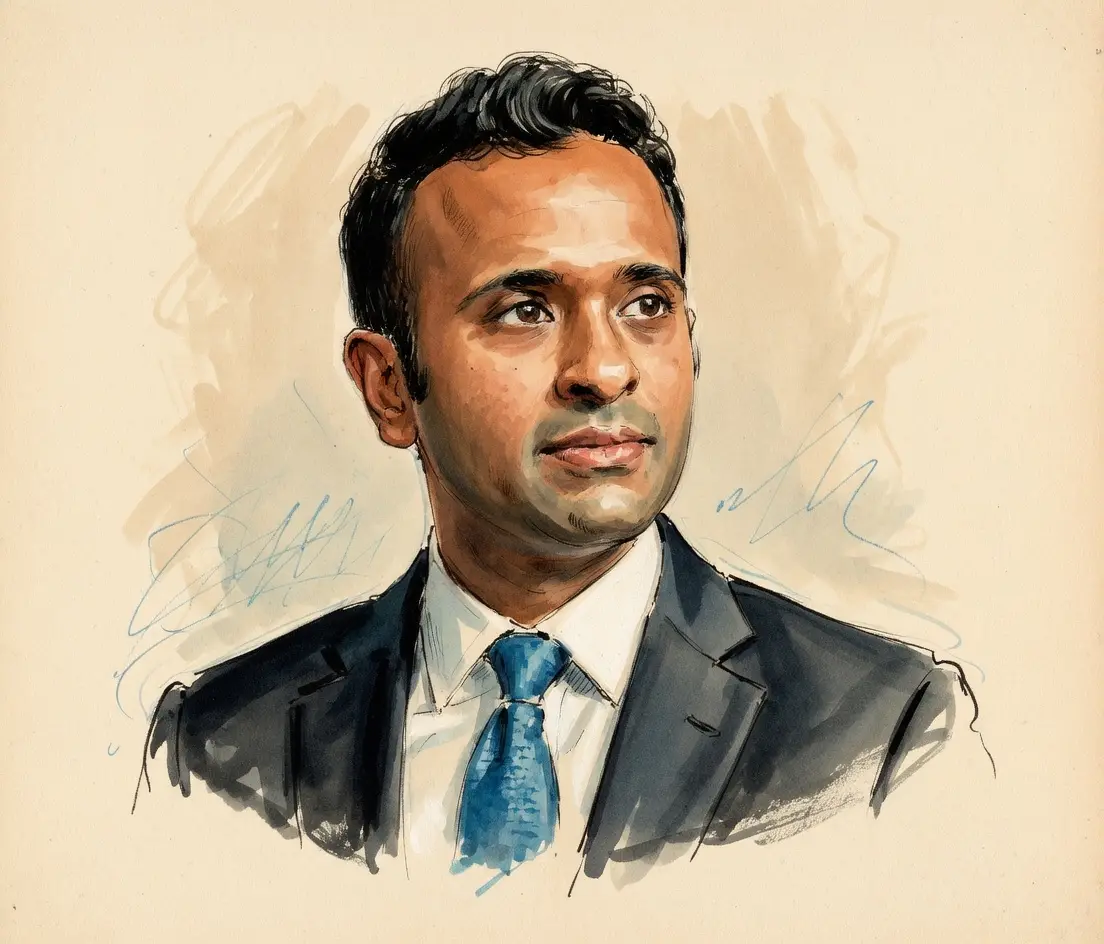
Vivek Ramaswamy on Public Speaking
TL;DR
Vivek Ramaswamy strongly champions a culture of free speech, opposing censorship by media and technology platforms.
Key Points
He advocates for policies to combat what he views as censorship by major technology platforms.
Ramaswamy has spoken on the importance of maintaining a culture of free expression against perceived institutional control.
His style of public discourse often involves engaging directly with challenging interviews to articulate his viewpoints.
Summary
Vivek Ramaswamy frames public discourse as being under threat by widespread censorship, primarily from major technology companies and media organizations. He asserts that the nation was founded on a culture of free speech, which he believes is being eroded by a "culture of fear" that silences dissenting viewpoints. His stance is one of strong advocacy for the unfettered exchange of ideas, positioning himself as a defender against institutional attempts to control public narratives. This advocacy is often highlighted in the context of perceived bias against conservative voices in mainstream communication channels.
His public appearances and social media posts frequently address this theme, arguing that the consolidation of power among tech giants allows them to exert undue control over public debate. Ramaswamy has suggested that professionals and entrepreneurs can learn valuable lessons from instances where tough interviews or challenging public forums occur, viewing them as necessary stresses for clarifying positions. This consistent focus implies that effective public speaking involves not only articulating one's message but also challenging the gatekeepers who might otherwise prevent that message from reaching the public.
Key Quotes
“Those on television call it 'Big Tech censorship,' but I call it 'government tech censorship,'”
Frequently Asked Questions
Vivek Ramaswamy is a strong proponent of free speech, viewing it as a foundational American value that is currently under threat. He frequently speaks out against what he describes as censorship, particularly from social media and technology companies. He believes the national culture must prioritize open expression over fear-based suppression.
Yes, Vivek Ramaswamy has voiced concerns about media bias, often framing it as an institutional mechanism that stifles specific viewpoints. He suggests that many public conversations are managed by gatekeepers who limit the scope of acceptable public discourse. He appears to view robust, direct engagement, even in difficult settings, as necessary to overcome these barriers.
Vivek Ramaswamy suggests that professionals can benefit by studying instances of tough interviews, such as those he has experienced. He seems to view these challenging public speaking scenarios as opportunities to clarify one's core beliefs under pressure. For him, such interactions are a critical part of political and professional engagement.
Sources8
Analyzing Vivek Ramaswamy's Public Speaking Abilities ...
Audio: Vivek Ramaswamy Says He Wants 'the Truth About ...
Our nation was founded on a culture of free speech, not ...
American dialect of Vivek Ramaswamy : r/EnglishLearning
What Professionals Can Learn from Mehdi Hasan's Tough ...
Entrepreneur speaks on Big Tech censorship
* This is not an exhaustive list of sources.