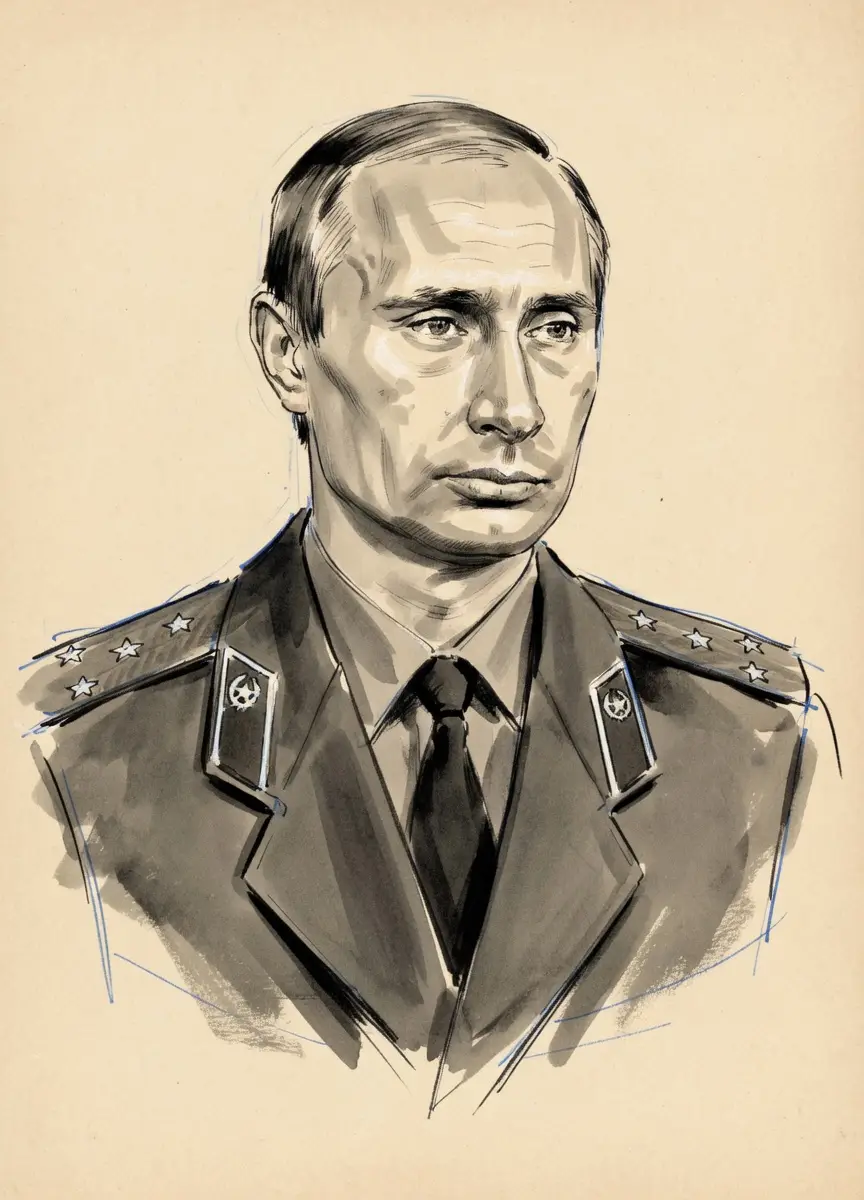
Vladimir Putin on Communism
TL;DR
Vladimir Putin strongly criticizes the Bolshevik Revolution and Lenin for creating a state with a weak foundation that ultimately fractured Russia.
Key Points
The leader stated in 2016 that Lenin’s concept of a federative state with secession rights heavily contributed to the Soviet Union's 1991 breakup.
He described the Soviet social experiment as having a “scandalous price,” leading to Russia lagging behind Western countries in economic terms, as noted in a 2000 publication.
In 2007, he addressed the victims of political repression at the Butovo execution site, criticizing ideals placed higher than fundamental human rights.
Summary
Vladimir Putin expresses a consistently negative view of the implementation of Communism in Russia, particularly criticizing its architect, Vladimir Lenin. He has accused Lenin of placing a “time bomb” under the Russian state by drawing administrative borders along ethnic lines, which he suggests contributed to the Soviet Union's eventual breakup in 1991. The president has publicly denounced the Bolshevik social experiment as historically futile, arguing it caused enormous damage to Russia by destroying market relations and imposing an ideology based on violence rather than law. He has also lamented the Soviet collapse as the “greatest geopolitical catastrophe of the century,” though this criticism is often framed nationally, focusing on the resulting dispersal of the Russian population across new states.
Despite this condemnation of its application, the leader has sometimes drawn parallels between Communist ideology and aspects of Christianity, noting shared concepts like freedom and equality, and comparing Lenin’s mausoleum to the relics of saints. He also acknowledged that his own membership in the Communist Party during the KGB years was a career requirement rather than a reflection of true conviction. Furthermore, the current government has taken steps to condemn the repression of the Soviet era, evidenced by honoring victims at sites like the Butovo execution ground, showing a clear official rejection of the system’s historical atrocities.
Frequently Asked Questions
Vladimir Putin's position is largely critical of the historical implementation of Communism, particularly blaming Lenin for creating structural weaknesses that led to the USSR's collapse. While he views the ideology's end as a geopolitical disaster for Russia in terms of lost territory, he rejects the Soviet system's core principles as destructive.
Yes, his position has evolved from being a card-carrying member of the Communist Party to a vocal critic of its destructive historical legacy, especially following his time in the KGB. He now aligns more with Russian nationalism and Orthodox Christian values rather than Marxist-Leninist doctrine.
The president has sharply criticized Vladimir Lenin, accusing him of being a “destroyer of a thousand years of history” and placing a “time bomb” under Russia through his federalist structuring. However, he has also drawn controversial comparisons between Lenin's handling of his remains and Orthodox saints' relics.
Sources6
Putin the Marxist-Leninist
Putin Compares Communism to Christianity
Putin Says Communism Comes From the Bible, Compares Lenin to a Saint
Is Vladimir Putin really a Communist?
Vladimir Putin accuses Lenin of placing a 'time bomb' under Russia
The Soviet Past in Putin's War on Ukraine
* This is not an exhaustive list of sources.