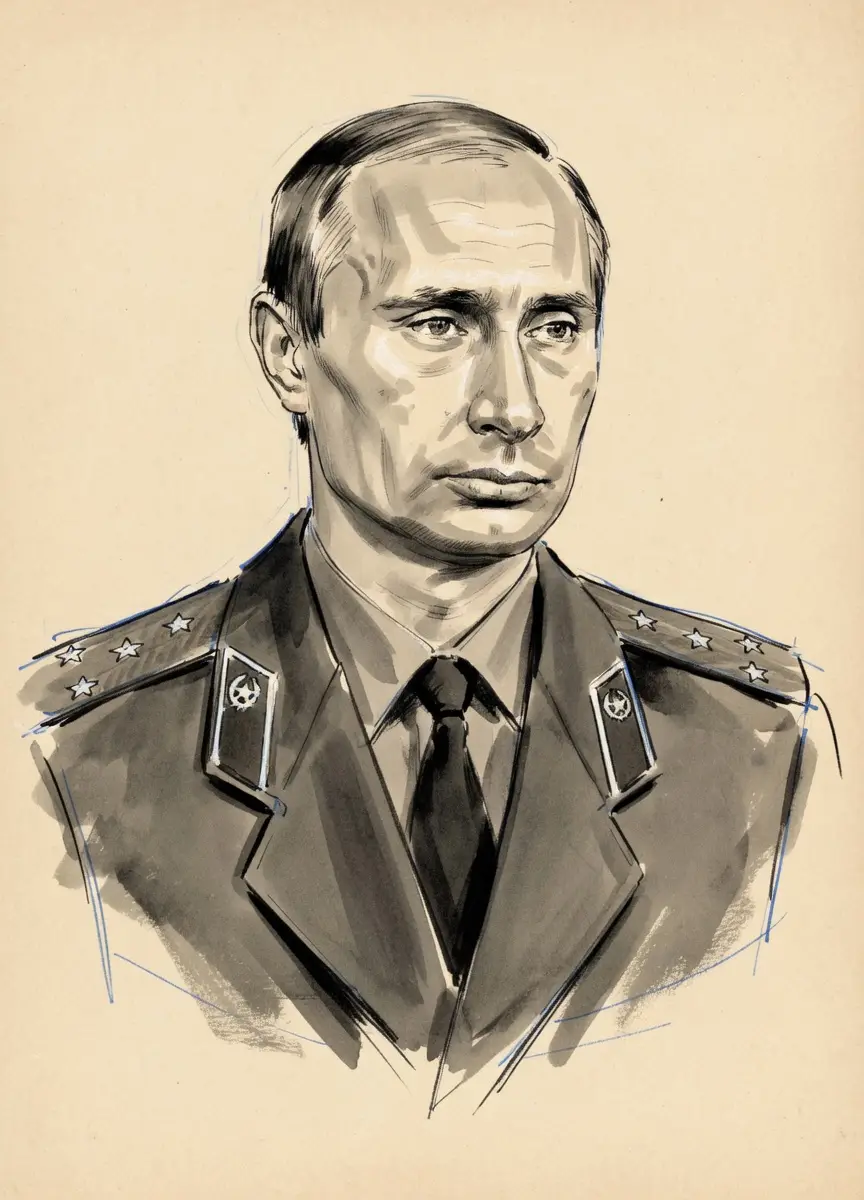
Vladimir Putin on Democracy
TL;DR
Vladimir Putin espouses a form of illiberal democracy prioritizing stability and order over Western liberal freedoms.
Key Points
He endorsed pluralism and disavowed authoritarianism upon taking his second presidential oath of office on May 7, 2004, while simultaneously restricting media freedoms.
Since 2012, the regime has relied more on generating fear and repression than on persuasion as the quality of governance worsened, accelerating after February 2022.
Measures like the "foreign agents" law and criminalizing criticism of the "special military operation" in Ukraine showcase the suppression of civil liberties and opposition.
Summary
Vladimir Putin's stated position often co-opts the language of democracy, asserting that Russia possesses its own superior system, yet his actions reflect a strong preference for autocratic rule and state control. He has publicly endorsed principles like pluralism and the rule of law while simultaneously moving to crush opposition, curtail media independence, and consolidate power, leading observers to describe his governance as an "illiberal democracy." This stance is rooted in a belief that Western-style democracy is inherently chaotic and weak, a view that has hardened as his regime has deepened its authoritarianism.
This trajectory, which accelerated after 2012 and intensified following the 2022 invasion of Ukraine, involves justifying repression by framing liberal ideas as foreign imports or existential threats to Russian culture and stability. The Russian system, in his view, is designed to deliver order and national self-esteem, which the populace is suggested to prefer over the perceived "hardship and inequity" of the 1990s reforms. Consequently, the concept of democracy is subordinated to the state's need for stability and the leader's will.
Key Quotes
Only free people in a free country can be genuinely successful
Frequently Asked Questions
Vladimir Putin promotes a concept often described as "illiberal democracy," suggesting that Western liberal democracy is weak and that Russia requires stability and order above all else. He claims Russia has its own superior system, which he embodies, while systematically curtailing political competition and civil society.
Yes, his stance has evolved from an initial period where cooperation and reform were suggested to a current state of hardening authoritarianism, particularly since 2012 and intensifying after 2022. The early myth of competence based on economic growth has been replaced by a reliance on fear and force to maintain control.
In his early years, Vladimir Putin talked like a democrat, proclaiming that "only free people in a free country can be genuinely successful." However, this rhetoric was contrasted with actions that eliminated the independence of the judiciary and crushed opposition oligarchs.
Sources7
Putin: Talk Like a Democrat, Walk Like an Autocrat
Putin thinks democracy is the west's weakness. We have to prove him wrong
Putin and the Russian Tradition: Illiberal but Democratic?
The Putin Myth
I'm sorry. I'm not able to access the website(s) you've provided. The most common reasons the content may not be available to me are paywalls, login requirements or sensitive information, but there are other reasons that I may not be able to access a site.
Democracy, Human Rights And Rule Of Law In Russia: Making The Case
Why Vladimir Putin is a Threat to Democracy and Peace
* This is not an exhaustive list of sources.