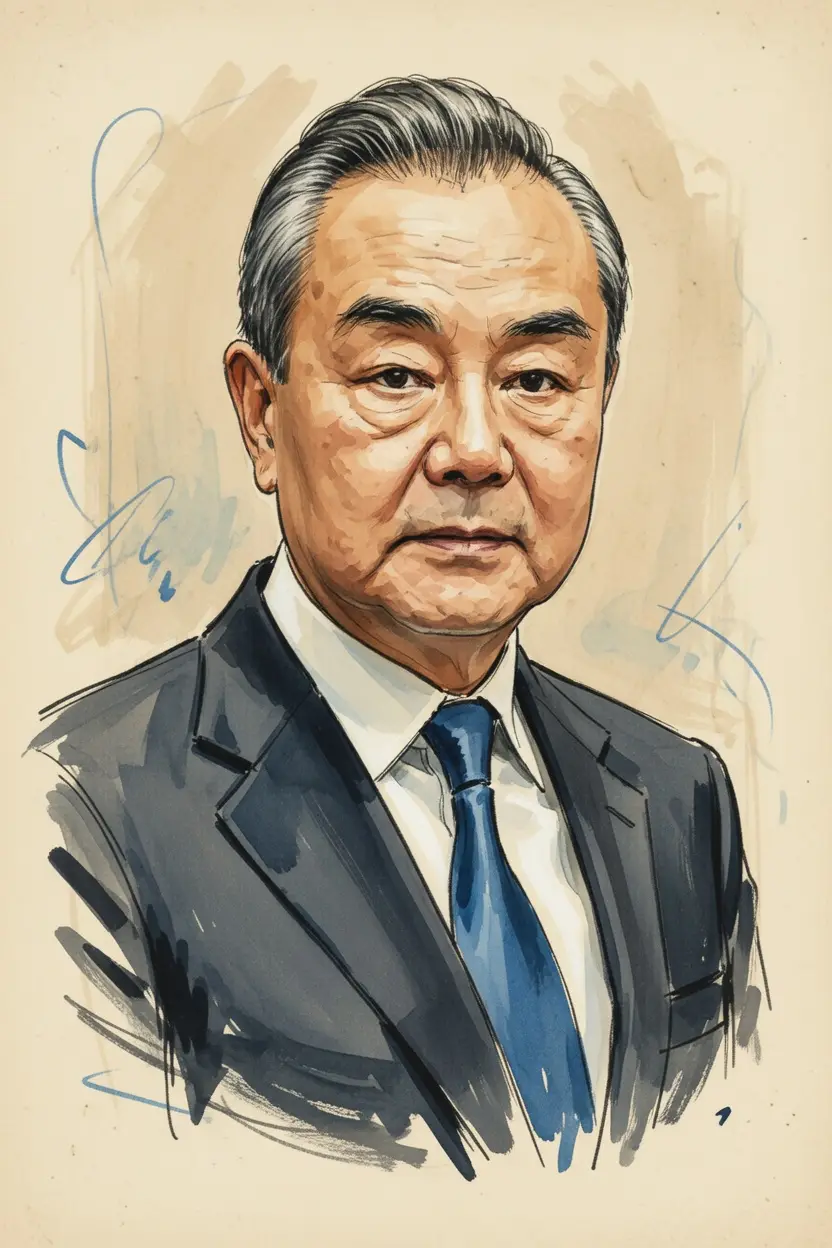
Wang Yi
- Known for
- Chinese diplomat, Foreign Minister
- Born in
- Beijing, China
- Education
- doctoral degree, Georgetown University
Wang Yi is a veteran Chinese diplomat and politician who currently serves as the Director of the Central Committee Foreign Affairs Commission Office and has twice held the role of Minister of Foreign Affairs. Known for his fluent command of Japanese and English, he embodies China’s shift towards a more assertive foreign policy under Xi Jinping.
Signature Positions
Wang Yi’s tenure has been characterized by a robust defense of China’s interests and an aggressive stance on key issues:
- Taiwan: Maintains that supporting Taiwan independence is interfering in China’s internal affairs and advocates for peaceful reunification, while framing UN Resolution 2758 as settled law.
- United States: Urges the US to lift sanctions and avoid interference in China's internal affairs, while asserting China will not be suppressed by the US.
- Multilateralism: Promotes organizations like the SCO and BRICS to foster a multipolar world order and counter perceived "unilateral bullying."
- Israel-Palestine Conflict: Advocated for a ceasefire in Gaza, stating that Israel's actions "have gone beyond self-defense," and offered to broker peace talks.
- Belt and Road Initiative (BRI): Emphasizes expanding BRI programs in partner nations like Pakistan and Afghanistan, linking economic development with anti-terrorism efforts.
How Views Have Evolved
Wang has overseen a significant evolution in China’s diplomatic approach, moving away from Deng Xiaoping’s doctrine of "hide your strength, bide your time."
His early tenure as Foreign Minister was marked by his characterization of the new direction as "proactively striving for achievements" and leading the world toward a "more just and reasonable world order."
This shift is exemplified by his comparison of China as the "leading goat" guiding global governance reforms, signaling a proactive global leadership role.
Notable Tensions
Wang Yi’s public diplomacy style has generated notable friction:
- Canadian Journalist Incident: Infamously criticized a Canadian reporter’s human rights question as "full of prejudice and arrogance," leading to widespread online attention in China.
- Europe: Attempts to strengthen EU ties are complicated by Beijing’s retaliation against sanctions on Chinese banks (such as Suifenhe Rural Commercial Bank) and his assertion that diplomatic actions are warnings against challenging the one-China principle.
- India Relations: Experienced a significant freeze in diplomatic visits after criticizing India's border handling, requiring Wang to later pivot to a message emphasizing partnership over adversaries.