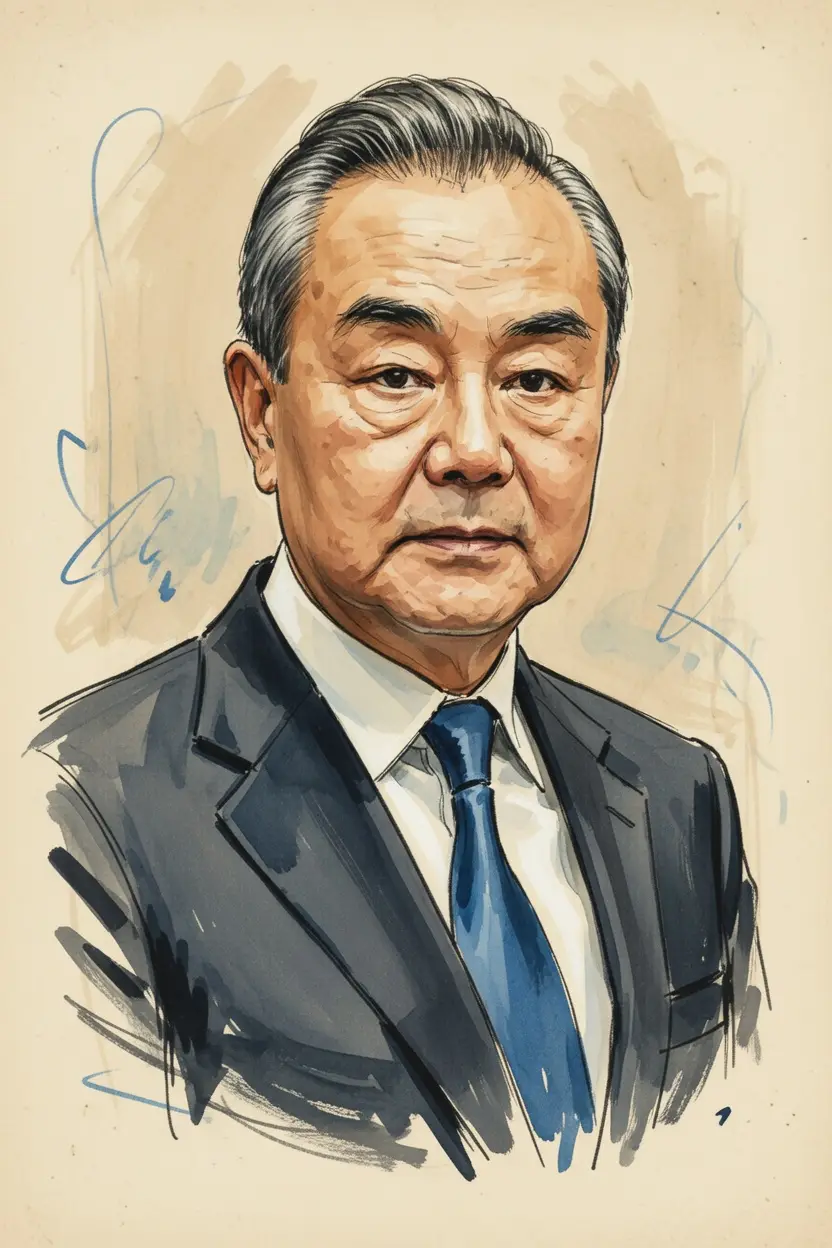
Wang Yi on S. Jaishankar
TL;DR
Wang Yi engages with S. Jaishankar as a necessary and professional diplomatic counterpart on key bilateral and multilateral issues.
Key Points
Wang Yi met with S. Jaishankar in New Delhi in August 2025 for high-level discussions on bilateral ties and global issues.
He stressed the need for the two countries to adhere to principles safeguarding territorial integrity during interactions in September 2020.
The Chinese Foreign Minister highlighted the importance of coordination within multilateral frameworks like BRICS and SCO during engagements.
Summary
Wang Yi views S. Jaishankar primarily as the necessary and professional counterpart for managing the complex India-China relationship, characterized by frequent, high-level engagement. Their interactions have centered on navigating border disputes, such as the situation in the Western Sector, while also coordinating on multilateral forums like the BRICS and SCO. Evidence of this stance is seen in their numerous bilateral meetings, where the tone is typically formal and focused on finding common ground or managing disagreements over sensitive issues, indicating a direct, working relationship essential for managing the world's two most populous nations.
The dynamic between the two foreign ministers has evolved alongside broader Sino-Indian ties, shifting from high-level cooperation in earlier periods to more tense exchanges following border incidents, particularly after 2020. While engagements are frequent, they often reflect underlying strategic mistrust, with Wang Yi consistently emphasizing China’s principled positions on sovereignty and territorial integrity. Despite these underlying tensions, the sustained pattern of meetings underscores a mutual recognition that direct communication between the respective foreign ministers remains indispensable for de-escalation and maintaining diplomatic channels.
Key Quotes
The common interests between the two countries far outweigh the differences. Both sides should continue to deepen mutual trust, explore strategic cooperation and properly manage issues left over from history so as to push for new progress of China-India relations.
Frequently Asked Questions
Wang Yi treats S. Jaishankar as the principal diplomatic counterpart for managing the often difficult Sino-Indian relationship. Their position is one of necessary professional engagement to address bilateral and multilateral challenges. This is demonstrated through consistent scheduling of high-level meetings despite underlying strategic friction.
Wang Yi has consistently emphasized that managing border issues requires adherence to agreements and respect for sovereignty from both sides. He often links progress in other aspects of the relationship to proper resolution of outstanding border issues raised by the Indian side. These remarks are typically made in the context of official press conferences or bilateral meetings.
Yes, the foreign ministers have maintained a pattern of regular meetings, including a significant one scheduled for August 2025 in New Delhi. These engagements highlight the mutual recognition that direct ministerial contact is crucial for maintaining stability. The opening remarks for these meetings often set the tone for the working sessions between the two nations.
Sources7
FM to attend G20 Foreign Ministers’ Meeting in Rio de Janeiro, Brazil, on 21-22 February 2024
Foreign Minister Wang Yi Holds Talks with Indian Minister of External Affairs S. Jaishankar
China-India relations: What happened during the border clashes?
Full text: China's position on the settlement of the Sino-Indian border issue
China's Foreign Minister Wang Yi holds talks with Indian External Affairs Minister S Jaishankar in Dushanbe
Opening remarks at my meeting with FM Wang Yi in New Delhi.
China's FM Wang Yi meets Jaishankar on sidelines of SCO meet
* This is not an exhaustive list of sources.