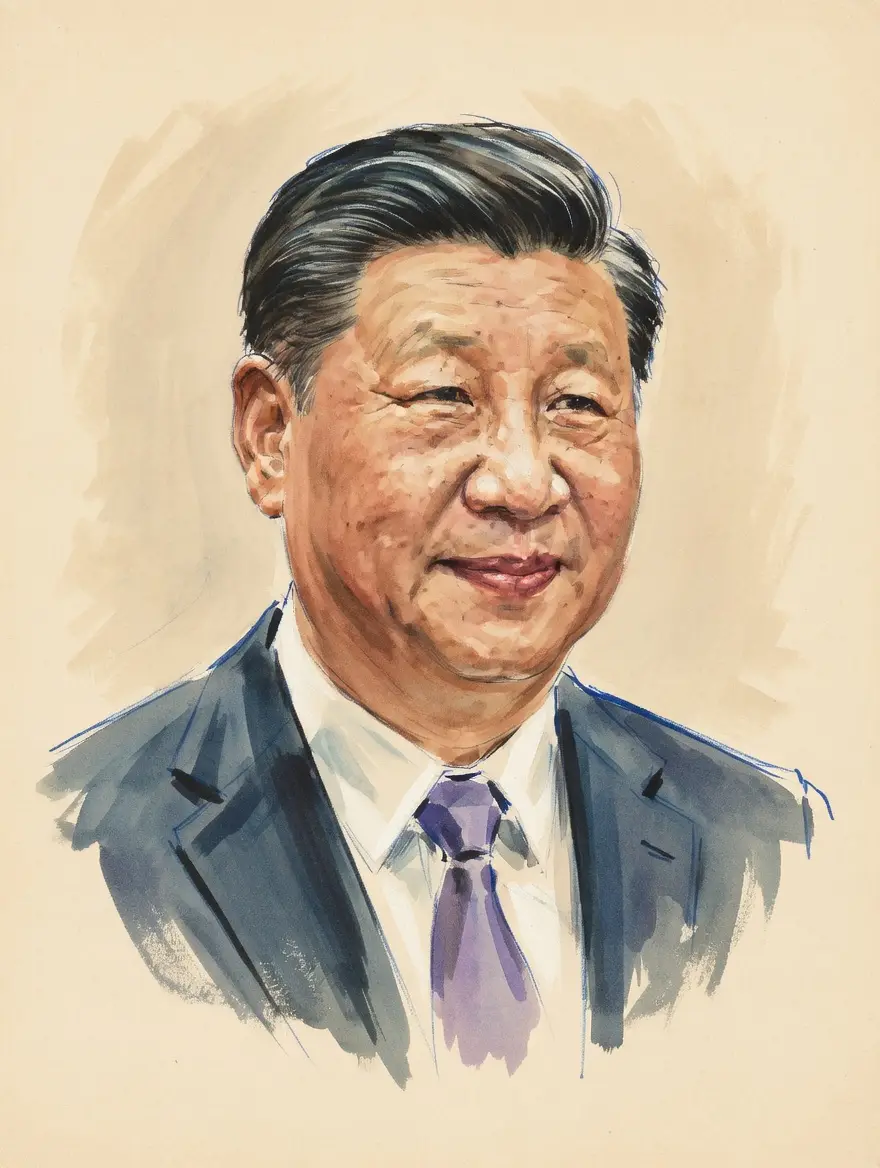
Xi Jinping on Economy
TL;DR
Xi Jinping prioritizes state-led, high-quality economic development through domestic innovation and reducing reliance on external factors.
Key Points
The state set a lower GDP growth target of between 4.5% and 5% for 2026.
Xi Jinping's policies emphasize a shift to "high-quality development" over rapid expansion.
His economic record is characterized by a mix of market liberalization and increased Party control.
Summary
Xi Jinping's economic position centers on achieving "high-quality development" over mere speed, emphasizing the central role of the Communist Party in guiding the economy. This strategy rejects purely market-driven models, instead favoring state control, industrial policy, and domestic technological self-reliance, often termed "dual circulation." Key evidence of this stance includes setting lower, more pragmatic growth targets amid global and domestic headwinds, such as a 4.5% to 5% GDP goal for 2026, reflecting a shift away from pre-pandemic aggressive expansion targets. The focus is on strengthening domestic demand and supply chains to insulate the economy from external shocks.
This approach reflects an evolution toward prioritizing national security and long-term resilience over immediate, rapid growth figures, even leading to speculation about increased state intervention in sectors like technology and welfare provisions. His administration has consistently backed massive state investment in strategic high-tech sectors, aiming to overcome perceived technological choke points imposed by foreign competitors. Furthermore, the push for "common prosperity" suggests an internal goal of rebalancing wealth distribution alongside maintaining the Party's ultimate economic authority.
Frequently Asked Questions
Xi Jinping's current stance emphasizes setting more realistic, lower growth targets, such as the 4.5% to 5% range for 2026, signaling a preference for quality over sheer speed. This reflects a strategic pivot toward long-term resilience and domestic strength rather than past high-speed expansion goals.
His overall ideological commitment to Party leadership over the economy has remained consistent, but the practical application has evolved. The focus has strongly shifted toward technological self-sufficiency and reducing reliance on external factors, which marks a significant policy emphasis compared to earlier in his tenure.
He views the Communist Party as essential for guiding the economy towards national goals, a concept often termed state-led development. This entails robust industrial policy and significant state investment in key technological areas to secure China's long-term economic and geopolitical standing.
Sources6
China sets a lower economic growth target of 4.5% to 5% for 2026 as challenges loom
China Sets Lowest Growth Target Since 1991 as Economy Struggles to Keep Momentum
What Are the Key Drivers of Xi’s Economic Policy in 2025?
China’s Economy: Xi Jinping’s Mixed Economic Record
Will AI Disruption Force Xi Jinping to Turn China Into a Welfare State?
China’s Latest Growth Target Is Lower Than Expected
* This is not an exhaustive list of sources.