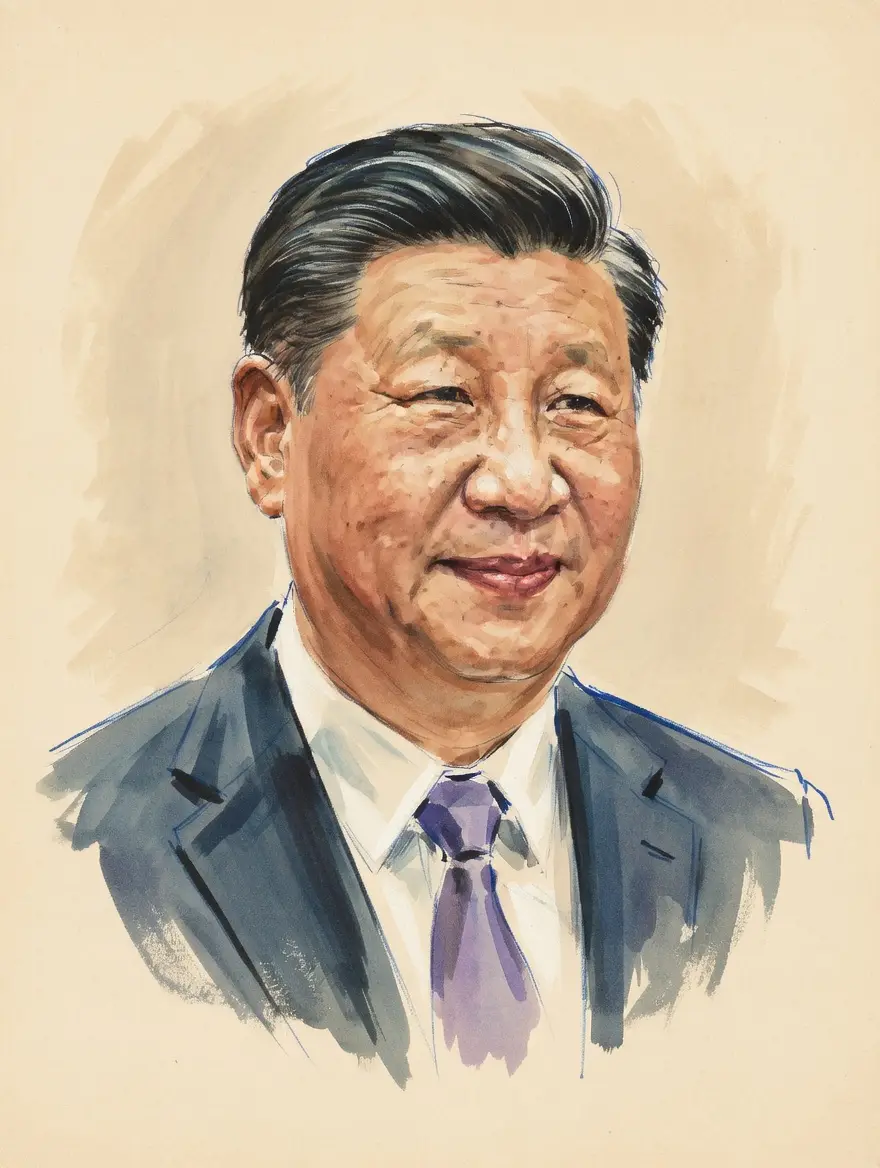
Xi Jinping on Human Rights
TL;DR
Xi Jinping champions a state-centric, people-centered human rights path prioritizing subsistence and development over Western liberal norms.
Key Points
Since the 18th National Congress in 2012, the CPC Central Committee with him at the core has prioritized people's interests as the primary goal for human rights protection.
He has stressed that there is no one-size-fits-all path for human rights development, requiring adherence to specific national conditions.
His tenure has been characterized by a sweeping crackdown on freedom of expression and association, and severe violations against Muslims in the Xinjiang region.
Summary
Xi Jinping's position on human rights centers on adhering to a "Chinese path of human rights development" that prioritizes the rights to subsistence and development as fundamental, holding them as paramount over civil and political rights, as defined by the Communist Party of China (CPC). This philosophy, described as people-centered, emphasizes fulfilling the aspirations of the Chinese people, with major achievements cited as the eradication of absolute poverty and the establishment of extensive social systems. He advocates for respecting the diversity of national conditions, asserting there is no one-size-fits-all model, while simultaneously promoting China's vision in global governance, which includes countering what it views as Western interference.
The implication of this stance is a direct challenge to the universal application of Western human rights standards. Officials associated with his administration push for the reform of global human rights governance, insisting on impartiality, objectivity, and non-politicization within international bodies, while actively opposing any external judgment or action seen as interfering in China's internal affairs. This has involved actively promoting the concept of a community with a shared future for mankind as China's alternative framework for international human rights discourse.
Frequently Asked Questions
Xi Jinping advocates for a Chinese path to human rights that is centered on the people and prioritizes the rights to subsistence and development. He firmly rejects the idea that there is a single universal model for human rights, insisting that each country must choose a path suited to its own national conditions. This position is used to counter international criticism of China's domestic policies.
The core philosophy has been consistently articulated since he took the top leadership role, emphasizing a country-specific approach. However, critics note that the tactics used to promote this view and implement domestic control have become more proactive and expansive, especially following his third term consolidation of power.
The leader has called for the reform and improvement of global human rights governance by upholding principles of impartiality and non-politicization in international forums. He proposes building a community with a shared future for mankind as the guiding vision, while opposing the use of human rights as a pretext to interfere in other countries' internal affairs.
Sources8
China: Xi Jinping's continued tenure as leader a disaster for human rights
China: No Letup in Xi Jinping's Repressive Rule | Human Rights Watch
Pushing for the Reform and Improvement of Global Human Rights Governance to Uphold the Right Approach to Human Rights
XI JINPING ON RESPECTING AND PROTECTING HUMAN RIGHTS
Pursuing a Country-Specific Path to Human Rights Advancement And Jointly Promoting Worldwide Progress in Human Rights
China's long game on human rights at the United Nations | Brookings
Xi Jinping on protecting human rights
Following a Chinese Path of Human Rights Development and Contributing China's Strength to Global Human Rights Governance
* This is not an exhaustive list of sources.