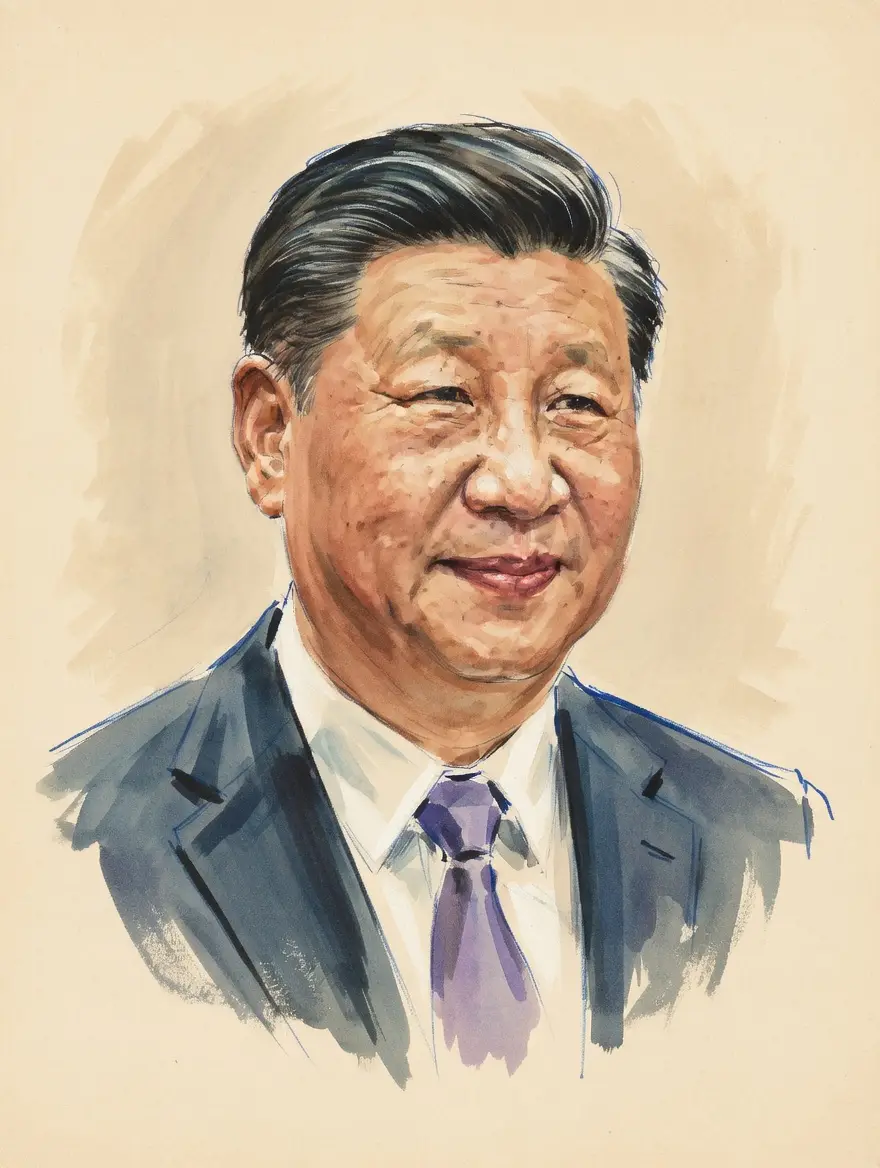
Xi Jinping on North Korea
TL;DR
Xi Jinping prioritizes regional stability, maintaining the North Korean state as a strategic buffer against U.S. influence.
Key Points
He expressed hope for opening a "new chapter" in relations with North Korea following a summit with Kim Jong Un in 2025.
He conducted his first personal state visit to Pyongyang in June 2019, meeting with Kim Jong Un amid stalled U.S.-DPRK negotiations.
Following a summit in 2026, the South Korean president asked him to serve as a mediator, to which he stated patience was needed.
Summary
Xi Jinping views North Korea primarily through the lens of Chinese strategic interests, which center on maintaining regional stability and preventing a collapse on its border. His core position has historically been defined by the strategic goal of “no war, no instability, and no nuclear weapons,” with stability being the overriding priority. This stance has led to complex diplomatic engagement, sometimes involving strong enforcement of UN sanctions during nuclear escalations, but often reverting to deeper economic and political ties when dialogue with the U.S. stalls. The relationship is fundamentally one of asymmetrical dependency, with Pyongyang reliant on Beijing for economic life support while China values the DPRK as a buffer against the U.S.-aligned Korean Peninsula.
The nature of the relationship has evolved under his leadership, particularly in response to North Korea’s aggressive nuclear and missile testing. Early in his tenure, Xi Jinping displayed clear displeasure, tacitly rebuking the leadership after defiant missile tests and notably downplaying the presence of North Korea's representative at a major 2015 parade while cultivating ties with South Korea. However, subsequent diplomatic overtures from Pyongyang, including Kim Jong Un's visits starting in 2018, brought a rapid rapprochement, culminating in Xi Jinping’s first state visit to Pyongyang in June 2019. This suggests a pragmatic shift: when direct engagement with the U.S. weakens, China moves to secure its immediate interests by shoring up the alliance.
Key Quotes
“We're making efforts but all our channels (with North Korea) are completely blocked so we can't communicate at all. I told him it would be good for China to play the role of a mediator for peace,”
“Xi also reportedly told Kim that China and North Korea are “good neighbours, good friends and good comrades” that share one destiny, and he was willing to “defend, consolidate and develop” the countries' relations, KCNA said.
Frequently Asked Questions
Xi Jinping's position is fundamentally rooted in maintaining stability on the Korean Peninsula, viewing North Korea as a vital strategic buffer. He has publicly articulated a policy preference for no war, no instability, and no nuclear weapons, though stability remains paramount. This often leads to a dual approach of engaging diplomatically while applying or easing sanctions based on North Korea's behavior.
Yes, his stance has shown clear evolution, shifting between periods of warmth and tension. There were visible signs of strain, particularly after North Korea's nuclear tests and the execution of Jang Song Thaek, leading to warmer ties with South Korea. However, high-level engagement resumed with multiple meetings starting in 2018, indicating a pragmatic return to prioritizing the alliance during geopolitical shifts.
As recently as a September 2025 meeting, he hailed the relationship, describing China and North Korea as "good neighbours, good friends and good comrades" who share one destiny. He expressed a willingness to "defend, consolidate and develop" the relationship, suggesting continued commitment to the neighboring socialist state.
Sources8
Xi Jinping expresses hope China can open 'new chapter' in ...
Kim–Xi meetings
Chinese President Visits North Korea
South Korea's Lee asks China's Xi for help engaging North ...
China-North Korea Relations | NCNK
Kim, Xi hail bond as North Korea says it will protect China's ...
Xi Jinping's First Visit to North Korea: Causes and Effects
South Korea's Lee seeks help from China's Xi Jinping on ...
* This is not an exhaustive list of sources.