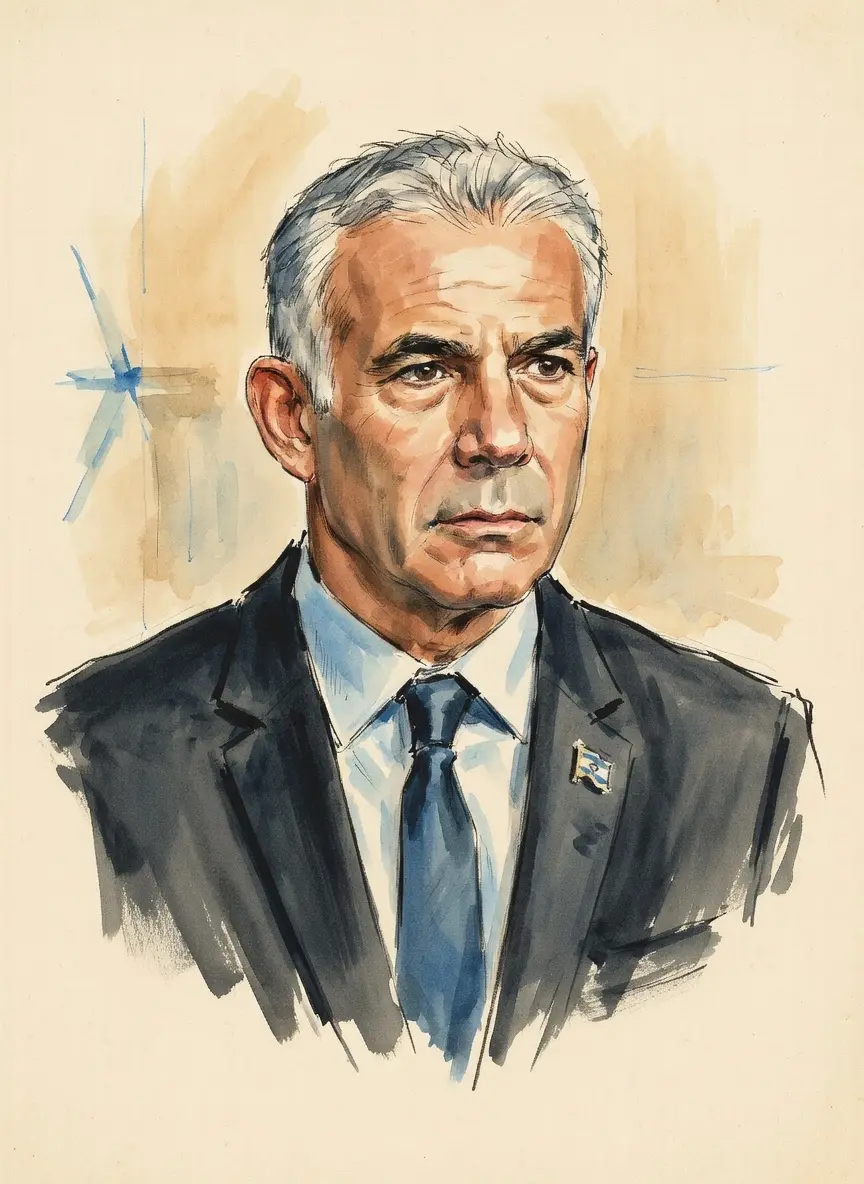
Yair Lapid
- Known for
- Israeli politician, Former journalist, Prime Minister of Israel
- Born in
- Tel Aviv, Israel
- Education
- Bar-Ilan University
Yair Lapid is a leading figure in Israeli centrism, having transitioned from a highly successful career in journalism and media to national politics. As the founder and leader of Yesh Atid, he has served as Prime Minister, Leader of the Opposition, and Minister of Finance, defining himself as a key alternative to the political right.
Signature Positions
Lapid's policy platform centers on maintaining Israel's democratic and Jewish character through strategic separation from the Palestinians and domestic reforms:
- Israel-Palestine Conflict: Advocates a two-state solution based on territorial compromise, proposing a separation agreement to preserve the Jewish majority while maintaining control over large settlement blocs like Ma'ale Adumim.
- Religion and State: Strongly supports civil marriage and increased public transportation on Shabbat, challenging the authority of the Chief Rabbinate.
- Haredim: Pushes for equal sharing of the burden, seeking to integrate the Haredi community into mandatory military or civil service.
- Foreign Relations: Emphasizes maintaining strong, bipartisan relations with the US and criticizing the United Nations for perceived bias against Israel.
How Views Have Evolved
Lapid’s political trajectory shows a willingness to shift alliances for pragmatic governance. He joined Benjamin Netanyahu's Likud-led government as Finance Minister (2013–2014) despite earlier criticism, only to later lead the coalition that replaced him.
His most significant shift was the formation of the rotation government with Naftali Bennett (2021–2022), enabling him to serve as Foreign Minister and later Prime Minister, ending Netanyahu's long tenure.
Notable Tensions
Lapid's political career includes several notable conflicts and contradictions:
- Holocaust History: Faced severe criticism for his strong statements regarding Polish complicity in the Holocaust, which included claiming Polish death camps and stating that Poland was complicit in the Holocaust.
- Diplomatic Pragmatism vs. Idealism: While advocating for a two-state solution, he has stated that most blame for the diplomatic stalemate belongs to the Palestinian side and dismissed the possibility of a comprehensive peace deal as unrealistic.
- Coalition Stance: Despite his call for unity government after the Gaza war, he rejected joining Netanyahu's emergency government, citing the inclusion of extremists like Itamar Ben-Gvir and Bezalel Smotrich.