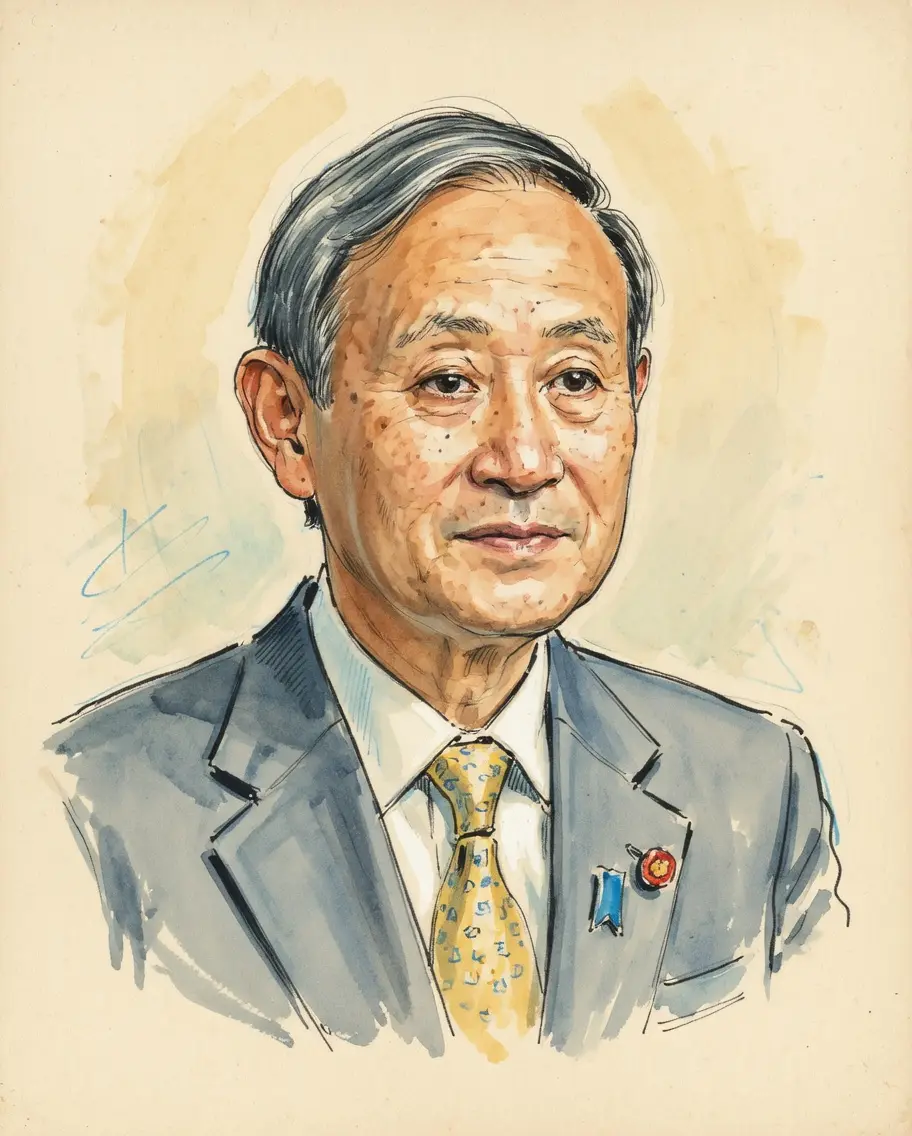
Yoshihide Suga
- Known for
- Prime Minister of Japan, Chief Cabinet Secretary
- Born in
- Ogachi (now Yuzawa), Japan
- Education
- Bachelor of Laws, Hosei University
Yoshihide Suga is a veteran Liberal Democratic Party (LDP) politician who served as Prime Minister of Japan from 2020 to 2021. Rising from humble beginnings as a strawberry farmer's son, he became known for his steadfast support for Shinzo Abe and his administrative longevity. His tenure was overwhelmingly defined by navigating the COVID-19 pandemic and the postponed Tokyo Olympics.
Signature Positions
Suga's leadership was marked by continuity with the Abe administration and focused on economic resilience and strategic foreign alignment:
- Chief Cabinet Secretary: Served for a record 2,820 days, acting as Abe's key manager and advisor during his second term.
- COVID-19 Response: Oversaw the implementation of the GoTo stimulus program for domestic travel, which later faced criticism and suspension due to infection concerns.
- Foreign Policy: Committed to strengthening the Japan-US alliance under Joe Biden and pledged a 2050 carbon neutrality goal.
- Immigration: Despite party resistance, he pushed to implement a visa program opening doors for unskilled foreign workers.
- Public Recognition: Gained significant fame and a nickname, "Uncle Reiwa," upon announcing the new imperial era name in 2019.
Notable Tensions
Suga's premiership faced immediate and intense public scrutiny over policy execution and adherence to guidance:
- Pandemic Handling: Faced severe criticism after suspending the GoTo Travel program while simultaneously attending an expensive steak dinner with high-risk individuals.
- Approval Ratings: Saw his approval ratings plummet to record lows (28% in August 2021) amid dissatisfaction with the handling of the pandemic and the hosting of the Tokyo 2020 Olympics.
- Internal Party Pressure: His decision not to seek re-election as LDP President was reportedly influenced by a lack of support from senior allies like Shinzo Abe and Taro Aso.
Suga’s background as a self-made politician and his role as the longest-serving Chief Cabinet Secretary positioned him as the consensus successor to Abe. His emphasis on Abenomics and digital transformation signaled a desire for continuity, though his short tenure ultimately ended amid public fatigue from the ongoing health crisis.